Committed to creating high-performance stainless steel composite cookware.

Leave Your Message
Committed to creating high-performance stainless steel composite cookware.
High-precision commercial steam pans and kitchen infrastructure custom-designed for seamless integration into high-volume buffet lines, steam wells, and commercial chafers.
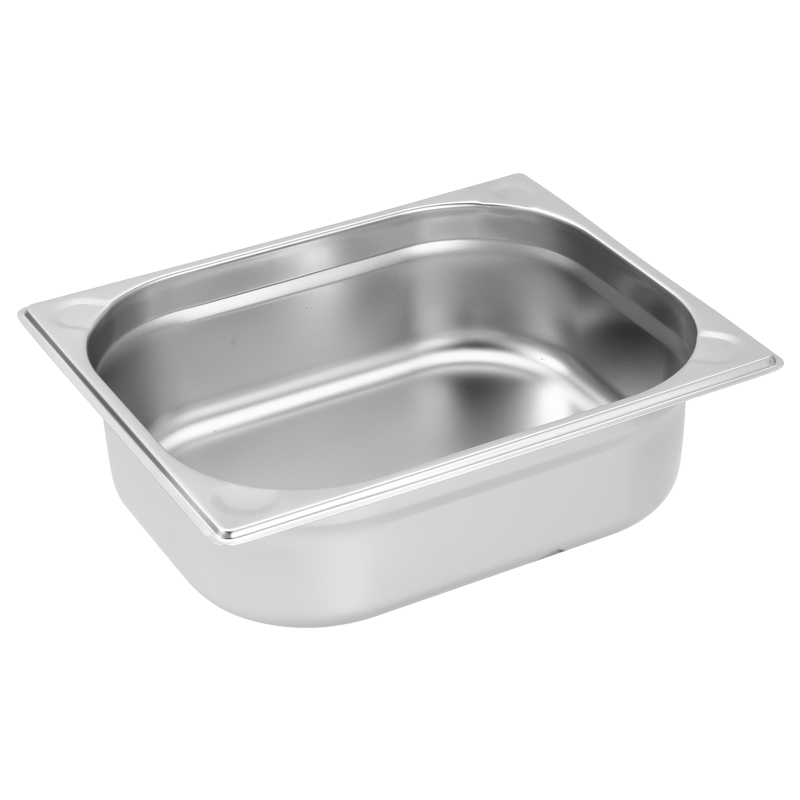
In modern high-capacity foodservice operations, the steam table pan for buffet food warming represents far more than an ordinary metal container. It functions as the critical thermodynamic interface between high-performance heating wells and culinary presentation. From five-star hotel buffet lines and cruise ship banquet galleries to institutional cafeterias, hospital dietary departments, and high-volume catering events, steam table pans (universally standardized under the Gastronorm EN 631-1 framework) determine the stability, hygiene, sensory appeal, and nutritional integrity of hot food holding.
The global commercial catering equipment market is witnessing an accelerated transformation. Driven by stringent international food safety mandates (such as HACCP and US FDA Food Code standards), rising utility and energy costs, and an acute culinary demand to minimize food waste caused by dehydration or cold spots, commercial operators are re-evaluating the physical metallurgy and structural geometry of their steam table arrays. A subpar steam table pan creates uneven thermal pockets, permits vital moisture to escape, accelerates enzymatic breakdown, and forces heating elements to run at unsustainable wattages. Conversely, an engineered stainless steel steam table pan delivers laminar conductive heat transfer, preserves volatile aromatic compounds, and protects margins against food spoilage.
Engineered wall-to-base radius contours maximize contact with convected steam and wet-well vapor, eliminating cold perimeter zones and scorching core centers.
Reinforced perimeter shoulder flares allow hassle-free stacking without surface vacuum lock, saving valuable labor minutes during accelerated banquet turnovers.
Heavy-gauge 18/8-18/10 austenitic stainless steel guarantees 100% resistance to acid etching from tomato bases, curries, and high-salinity hot holding broths.
Steam table pans operate across two primary commercial warming architectures: wet-well Bain-Marie systems and dry-well radiant electric wells. Each operational mode imposes distinct mechanical stresses upon the metal substrate:
Under regulatory guidelines, cooked hot foods must remain continuously at or above 60°C (140°F) throughout buffet service to prevent rapid pathogen multiplication (e.g., Clostridium perfringens and Bacillus cereus). A premium steam table pan engineered with consistent material thickness maintains this threshold reliably across all pan corners with up to 18% less energy consumption.
Modularity is the backbone of commercial buffet engineering. Standard steam table wells measure approximately 12" × 20" (nominally aligned with the European Gastronorm GN 1/1 standard of 530 × 325 mm). By leveraging fractionally sized pans, catering managers configure modular layouts according to patron traffic, culinary variety, and turnover speed.
| Gastronorm / Pan Size | Dimensions (mm) | Common Depths | Volumetric Capacity Range | Optimal Buffet Warming Application |
|---|---|---|---|---|
| Full Size (GN 1/1) | 530 × 325 mm (20.8" × 12.8") | 65mm, 100mm, 150mm | 9.0L to 21.0L | Carving meats, roasted poultry, large roasts, banquet pasta dishes |
| Two-Thirds (GN 2/3) | 354 × 325 mm (13.9" × 12.8") | 65mm, 100mm, 150mm | 5.5L to 13.0L | Medium buffet entrees, side vegetables, casseroles in compact displays |
| Half Size (GN 1/2) | 325 × 265 mm (12.8" × 10.4") | 65mm, 100mm, 150mm | 4.0L to 9.5L | Mashed potatoes, steamed rice, scrambled eggs, hot poultry gravies |
| One-Third (GN 1/3) | 325 × 176 mm (12.8" × 6.9") | 65mm, 100mm, 150mm | 2.5L to 5.7L | Specialty sauces, sautéed vegetables, sausages, breakfast beans |
| One-Fourth (GN 1/4) | 265 × 162 mm (10.4" × 6.4") | 65mm, 100mm | 1.8L to 2.8L | Warm dessert toppings, hot melted cheese, warm breakfast syrups |
| One-Sixth (GN 1/6) | 176 × 162 mm (6.9" × 6.4") | 65mm, 100mm, 150mm | 1.0L to 2.4L | Condiments, warm glazes, specialty dips on breakfast and dinner bars |
| One-Ninth (GN 1/9) | 176 × 108 mm (6.9" × 4.2") | 65mm, 100mm | 0.6L to 1.0L | Small portion hot garnishes, croutons, crisp bacon bits |
The culinary lifespan of a steam table pan is strictly determined by its metallurgical composition. High-volume commercial warming environments impose severe thermal cycle fatigue:
Understanding the unique operational stressors of different culinary sectors allows executive chefs and food and beverage directors to deploy the ideal steam table pan configurations:
In upscale hospitality, aesthetic refinement must harmonize with strict thermodynamic performance. Scratched or warped pans degrade customer perception instantly. High-end buffet installations utilize satin-finished or mirror-polished 304 stainless pans with matching notched lids, roll-top chafing covers, or soft-closing hydraulic glass-top lids. Food turnover in these environments is rapid, necessitating pans with reinforced anti-jam corners that staff can pull and replace in seconds without clatter, spills, or burns.
Banquet logistics require food to be cooked in central production kitchens, transferred directly into steam table pans, loaded into mobile insulated heated holding cabinets (hot carts), transported across venue facilities, and dropped directly into buffet steam wells. This "cook-chill-reheat-hold" workflow requires dimensional tolerances so accurate that the pan fits universally into blast chillers, combi ovens, mobile transport racks, and buffet chafers without transferring food between different vessels.
Hospitals, nursing homes, and educational institutions serve hundreds or thousands of meals within tightly compressed dining intervals. Dietary guidelines require rigorous monitoring of food temperature and nutrition retention. In steam-heated tray service lines, heavy-duty perforated steam pans are frequently paired with solid outer pans to hold vegetables and delicate proteins above draining liquids, preventing waterlogging and maintaining crisp texture and vibrant coloration throughout the serving period.
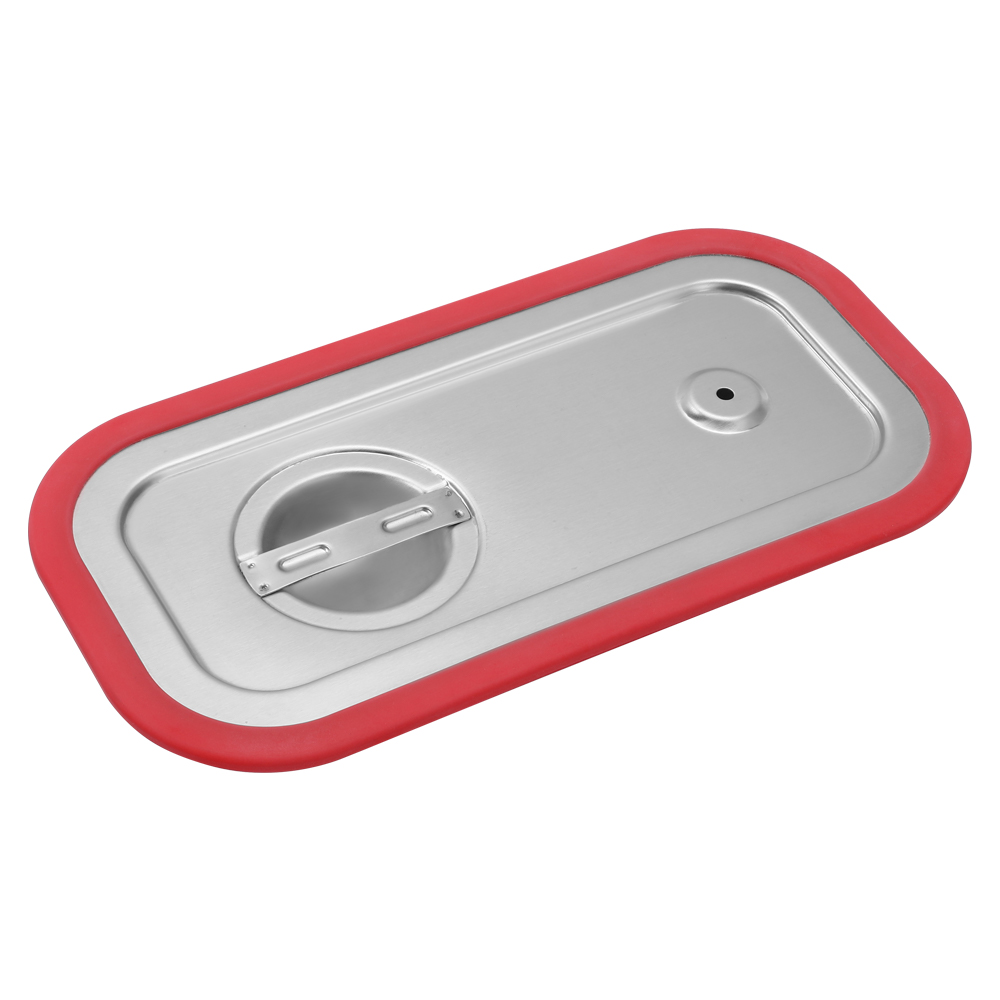
The explosive rise of off-premise dining has introduced hybrid food holding stations where steam table pans act as temporary staging repositories for rapid order fulfillment. Pans paired with silicone-gasket sealing lids prevent liquid spillage and moisture vapor loss, enabling kitchen teams to scoop hot, fresh ingredients into takeout containers at peak service tempo while maintaining strict temperature compliance.
Commercial kitchen automation and sustainability goals are reshaping buffet equipment architecture. Emerging technologies are setting new standards for steam table pan performance:
Manual probe thermometers are rapidly giving way to automated IoT monitoring systems. Modern steam table pans are increasingly engineered to interface with smart induction wells and non-contact infrared thermal sensors mounted within buffet canopies. These sensors detect pan surface temperature fluctuations in real time, alerting culinary supervisors through mobile dashboard notifications when pan contents drop near the critical 60°C (140°F) threshold or when food volume has decreased to the point of imminent dehydration.
While traditional steam wells rely on heated water baths, modern eco-conscious buffets are shifting toward waterless induction warming stations. Induction eliminates water consumption, descaling maintenance, and scalding hazards. Manufacturers are now producing composite and tri-ply stainless steam table pans with ferromagnetic base cores (e.g., AISI 430 clad layers), allowing pans to heat up directly and instantaneously through electromagnetic induction while maintaining pristine culinary-grade 304 stainless steel on the food contact face.
Commercial dishwashing of high-protein, starchy buffet items (such as melted cheese sauces, oatmeal, and refried beans) consumes massive volumes of hot water and chemical detergents. Cutting-edge industrial steam table pans now incorporate food-grade nano-ceramic hybrid linings. These coatings reduce surface adhesion by up to 70%, drastically decreasing scrubbing labor, cutting chemical water pollution, and extending the operational working lifespan of the pan.
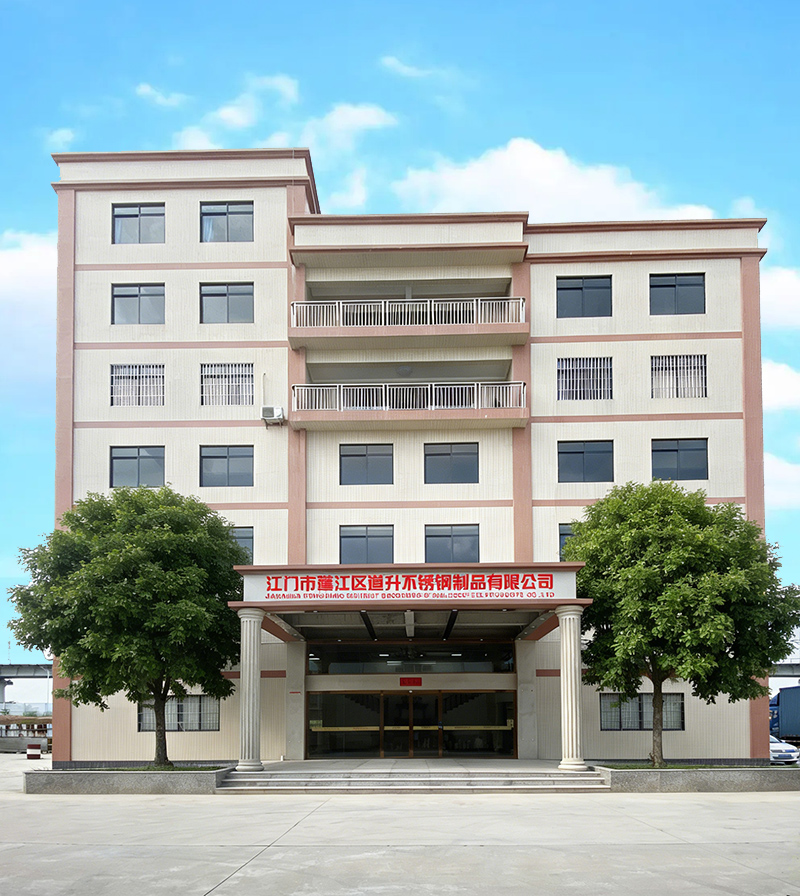


Jiangmen Pengjiang District Daosheng Stainless Steel Products Co., Ltd. is a professional manufacturer specializing in the design, research and development, and production of commercial kitchen cookware. Headquartered in Guangzhou, China, the factory covers an area of 30,000 square meters.
Since 1993, Daosheng has focused on the research and development and manufacturing of stainless steel commercial cookware, with over thirty years of experience. As a family business, we are rooted in our founder's profound knowledge of stainless steel materials and passion for cookware manufacturing, and are committed to creating high-performance stainless steel composite cookware.

Continuously focusing on stainless steel commercial kitchen equipment, we possess rich manufacturing experience and deep industry insights.

Owning our factory eliminates rent, allowing us to provide customers with more cost-effective customized solutions.

Equipped with automated production lines and high-efficiency equipment, we continuously optimize production capacity and delivery capabilities.

Covering multiple industry applications such as healthcare, public services, and kitchen automation, meeting the needs of various business scenarios.
For over thirty years, we have remained focused on the field of stainless steel cookware, continuously refining our processes and striving for excellence, accumulating rich manufacturing experience and professional strength. With stable product quality and excellent service capabilities, Daosheng's products are widely used in various industries and organizations, including healthcare, kitchen automation, public health services, and international charitable projects (such as UNICEF). Our products include: Stainless Steel Soup Pot, Stainless Steel Frying Pan, Stainless Steel Oblique, Bucket, Gn Pan, and Buffet Chafing.

When outfitting large-scale buffet lines or renewing catering assets, global procurement directors must evaluate several critical parameters to protect operating budgets and ensure seamless back-of-house workflow:
Explore our complete collection of commercial kitchen and buffet food warming equipment, manufactured to international hospitality standards.