

Commercial Work Table With Sink For Restaurant Kitchen Setup: Architectural Dynamics & Global Standards
An in-depth review of industrial design, ergonomic workflow engineering, HACCP integration, and material science in commercial food service spaces.
1. Industrial Transformation: The Strategic Role of Work Tables with Integrated Sinks
The contemporary commercial kitchen has evolved from a chaotic assembly of disjointed stainless fixtures into a precision-engineered culinary production facility. At the epicenter of this architectural transformation is the commercial work table with sink. In an era where commercial square footage costs are soaring across metropolitan hubs—from New York and London to Tokyo and Singapore—restaurant operators can no longer afford redundant travel distances between standalone cutting stations, utility sculleries, and hand-washing basins.
Integrating a deep-drawn or fabricated sink bowl directly into a heavy-gauge stainless steel prep table transforms a passive surface into an active sanitary station. This integration drastically reduces cross-contamination hazards by localizing the cycle of trimming, washing, sanitizing, and staging raw ingredients. According to commercial kitchen ergonomic metrics, having immediate running water access within arm's reach of the prep surface eliminates up to 38% of unnecessary line-cook movements during peak dinner service, directly augmenting operational cadence while securing rigorous hygiene compliance.
Key Industrial Shift: From Static Benches to Multi-Functional Hygiene Hubs
Modern back-of-house (BOH) design prioritizes continuous flow. A commercial work table with sink consolidates food prep, knife cleaning, scrap rinsing, and hands-free water access into a single unified footprint, serving as the foundational building block for modern restaurant layout compliance.
2. Metallurgical Mastery: Engineering with AISI 304 & 316 Food-Grade Stainless Steel
The operational lifespan of a commercial prep table with an integrated sink depends strictly on metallurgy and fabrication craftsmanship. Commercial food prep environments expose metal surfaces to severe corrosive stressors: organic acids from citrus, tomatoes, and marinades; caustic sanitizers containing chlorine or quaternary ammonium compounds; and constant moisture exposure.
High-tier kitchen setup specifications demand authentic austenitic AISI 304 (18/8) stainless steel with an optimal chromium (18%) and nickel (8-10%) composition. The nickel addition produces an austenitic microstructure that delivers superior ductility, weldability, and resistance to pitting corrosion compared to inferior ferritic alloys like 430 stainless steel. In specialized marine galley installations or heavy seafood processing kitchens where hyper-saline brine is persistent, upgradeable AISI 316 stainless steel containing 2-3% molybdenum provides unyielding defense against severe chloride attack.
| Specification Parameter | Standard Commercial Grade | Heavy-Duty Industrial / Daosheng Standard | Critical Impact on Kitchen Setup |
|---|---|---|---|
| Material Alloy | AISI 430 or Low-Nickel 201 | AISI 304 (18/8) / Custom AISI 316 | Corrosion immunity, zero rust leaching, chemical resistance. |
| Top Plate Gauge | 18 Gauge (1.2 mm) | 14 to 16 Gauge (1.5 mm - 2.0 mm) | Withstands heavy butcher cleavers, prevents warping and oil-canning. |
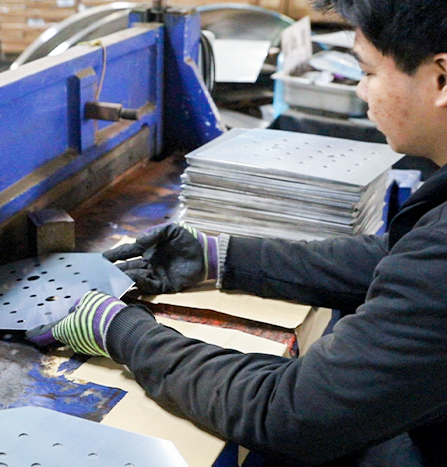
| Sink Bowl Construction | Welded 2-piece / Seamed | Deep-Drawn Seamless or Fully TIG Welded & Ground | Eliminates internal crevices where bacteria, biofilm, and mold flourish. |
| Sound Deadening | Minimal spray coat | Heavy acoustic dampening pad + sound deadener | Dampens cleaver impact noise and continuous water splash resonance. |
| Backsplash Configuration | Flat or None | 1.5" to 6" Box Backsplash with 45° / 90° Return | Prevents liquid seepage behind wall-hung drywall and tile joints. |
3. Ergonomic Flow & HACCP-Driven Kitchen Zones
To achieve seamless certification under Hazard Analysis Critical Control Point (HACCP) regulations, commercial kitchens must isolate specific prep workflows. The versatile commercial work table with sink serves distinct functions across kitchen sectors:
- Butchery and Protein Prep Line: Equipped with an extra-deep sink (12 to 14 inches) to thaw frozen vacuum-sealed meats under cold running water without splashing onto adjoining work surfaces. Marine edges around the perimeter prevent blood and moisture from dripping onto the floor, preventing slip hazards.
- Garde Manger & Raw Vegetable Processing: High-speed salad and raw produce prep requires integrated dual-purpose tables where vegetables are peeled, rinsed in an integral sink with a scrap basket strainer, and chopped on an adjacent NSF-approved high-density polyethylene (HDPE) cutting board overlay.
- Seafood Processing Stations: Continuous cold water misting and rapid scale/gut washing require built-in faucets with high-arc goosenecks and removable perforated drain trays to capture scales before they foul municipal grease traps.
- Pastry & Bakery Workstations: While baking tables frequently utilize wooden or marble tops, modern high-capacity bakeries rely on stainless steel tables with offset wash basins for quick hydration, dough hook rinsing, and bench-scraper sanitation without cross-pollinating the flour line.
4. Structural Architecture: Reinforcements, Legs & Modular Shelving
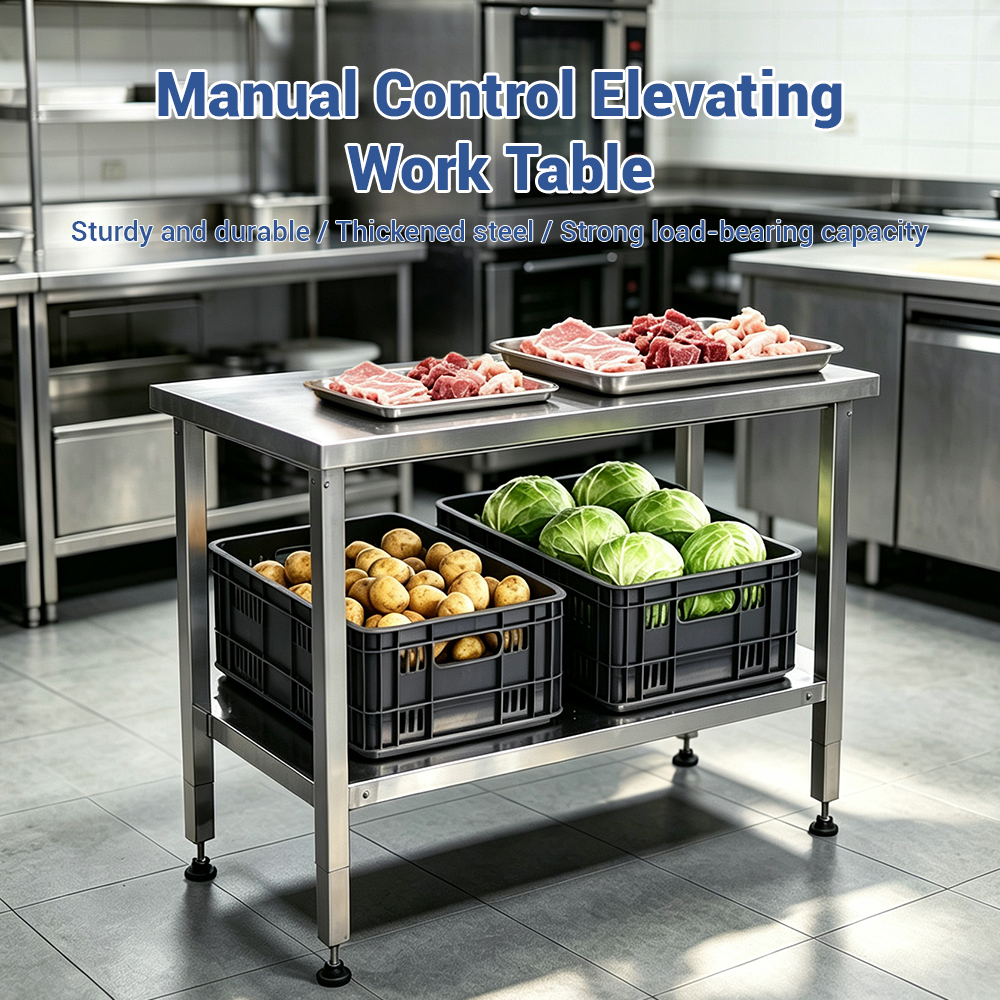
A work table with an integrated sink carries substantial static and dynamic weight loads: a sink bowl filled with 15 gallons of water adds over 125 lbs of localized weight, alongside heavy commercial stand mixers, stock pots, and repetitive cleaver strikes. Structural integrity requires:
- Heavy-Gauge Hat Channels: Under-table reinforcement with galvanized or stainless steel hat channels bonded with acoustic structural adhesive to ensure a flat, rigid work plane without hollow rattling.
- Tubular Leg Assemblies: 1-5/8" diameter heavy-gauge stainless steel tubular legs, anchored into heavy cast gussets, fitted with adjustable bullet or flanged feet capable of leveling on uneven back-of-house drainage slopes.
- Undershelf Versatility vs. Plumbing Clearances: Because sink bowls drop down 10 to 14 inches and require P-traps, vacuum breakers, and grease interceptor feed lines, specialized tables feature notched or shortened lower storage shelves. This design maintains maximum storage for GN pans and pots while permitting unobstructed plumbing service access.
5. Global Trends: Smart Kitchens, Modularity & Green Plumbing Systems
The commercial food service landscape is embracing modularization and sustainability. Modern turnkey restaurant kitchen fit-outs avoid fixed masonry or permanent built-in fixtures in favor of modular stainless workbenches that can be rolled, re-piped, and reconfigured in hours. Key trends include:
- Pre-Plumbed Quick-Disconnect Hydraulic Nodes: Modern tables feature pre-punched 8-inch center faucet holes with integrated rear service chases, enabling rapid plumbing docking with braided stainless flexible hoses and quick-disconnect fittings.
- Foot-Pedal and Infrared Sensor Valves: Touchless water dispensing eliminates the risk of cross-contamination from raw chicken or seafood juices to manual faucet handles, simultaneously curbing water consumption by up to 40%.
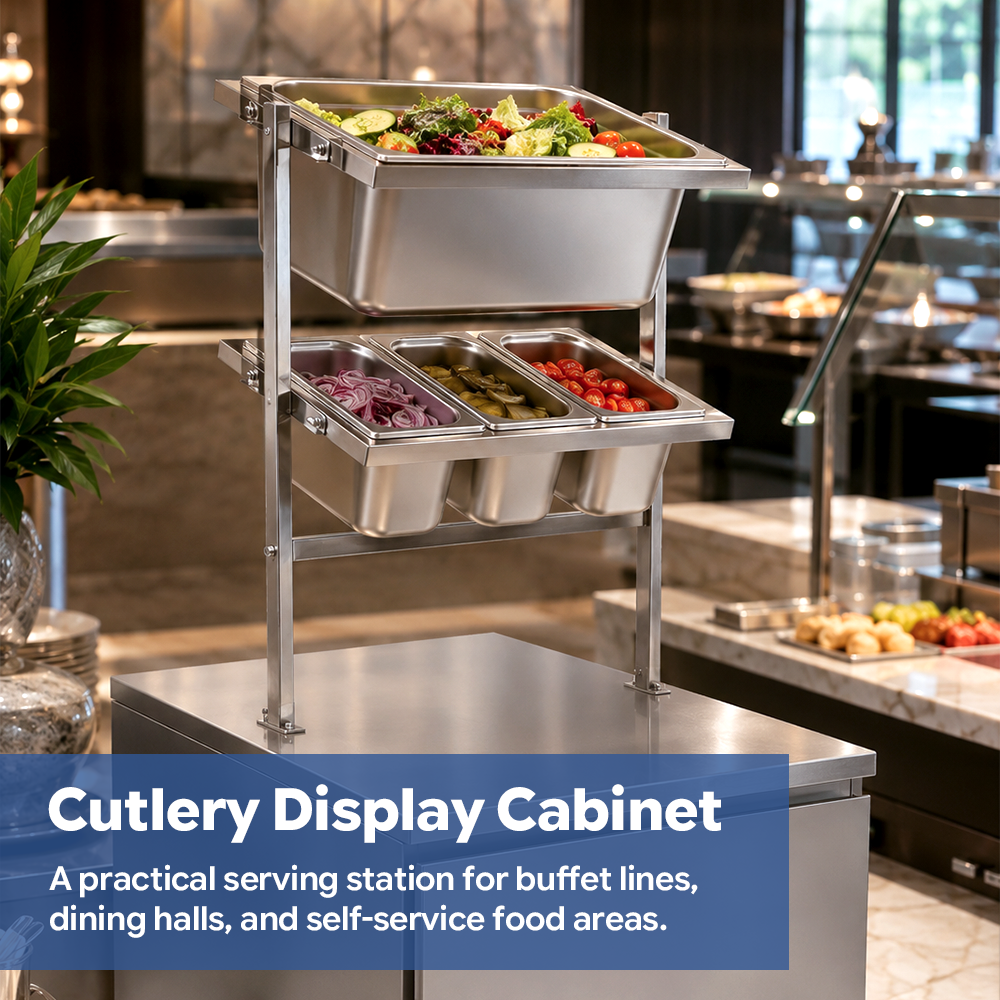
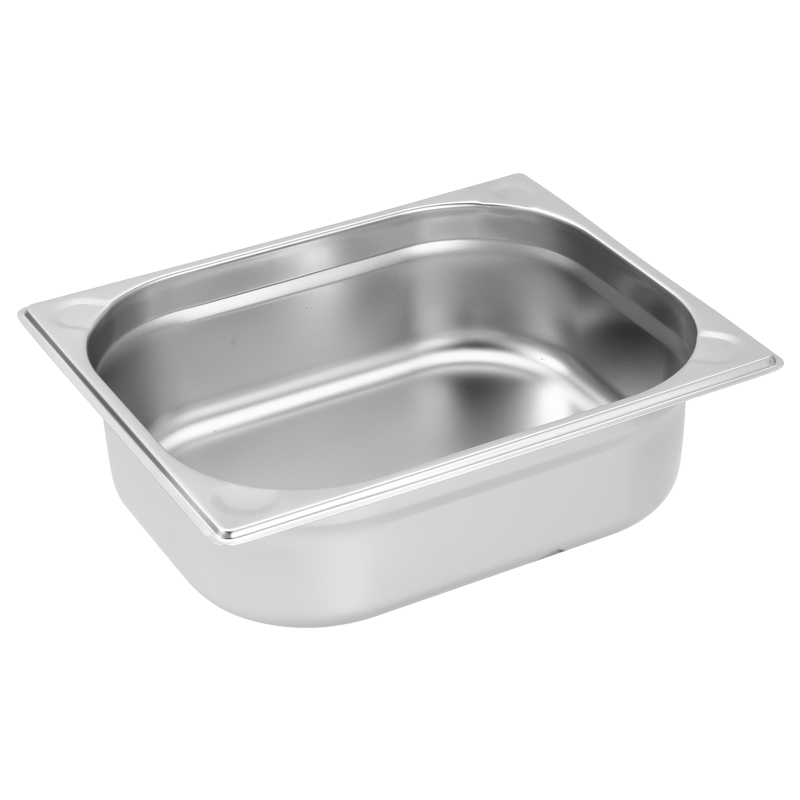
- Multi-Tier GN Pan Integration: Laser-cut over-shelves, pot racks, and built-in GN food pan wells mounted above the splash line allow cooks to wash, prep, and store components within a vertical, ergonomically sound workspace.