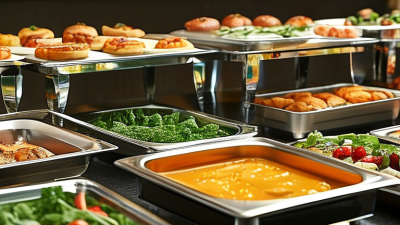
Choosing the right Horeca Food Pan in China is not only a matter of price or appearance. It affects food safety, service speed, storage efficiency, and daily labor.
In busy hotels, restaurants, and catering kitchens, a stainless steel GN pan may hold steaming noodles at lunch. A clear polycarbonate pan may display chilled fruit in a breakfast buffet. A melamine pan may support elegant presentation, but it needs careful handling. Small details matter. Rim strength, pan depth, corner design, temperature range, and cleaning performance can change the whole workflow.
Chef Thomas Keller, a respected professional-kitchen authority, once said, “A recipe has no soul. You, as the cook, must bring soul to the recipe.” His words also apply to equipment selection. The best Horeca Food Pan supports the cook without creating extra problems.
China offers many capable manufacturers, including Winco, Cambro, Vollrath, and several specialized OEM factories. Their products differ in steel grade, molding accuracy, insulation, surface finish, and quality control. Some suppliers provide impressive samples but weaker batch consistency. That is where buyers must remain careful.
This guide examines the top China Horeca Food Pan options for hotels, restaurants, cafés, and institutional kitchens. It compares material performance, GN compatibility, durability, customization, and practical value. The market is broad. Not every popular pan is the best choice. A cheaper product may become expensive after repeated warping, staining, or replacement.
The final decision should match the kitchen’s menu, equipment, budget, and service rhythm. A perfect pan does not exist. A suitable one usually does.
Types of Food Pans Commonly Used in China’s Horeca Industry
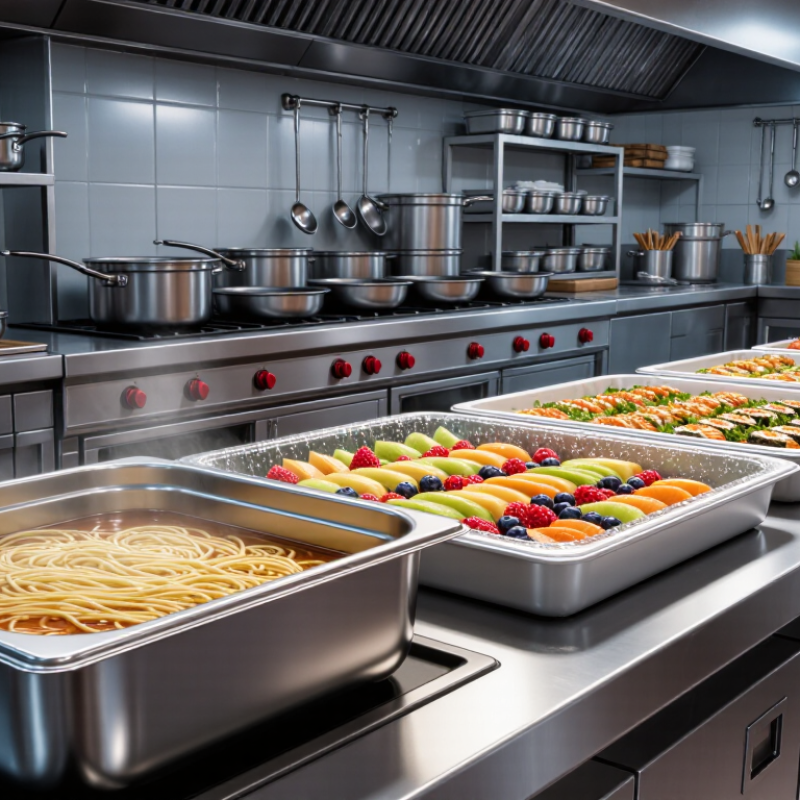
China’s Horeca kitchens commonly use stainless steel GN food pans for hot dishes, soups, and buffet service. Their strong edges tolerate frequent washing and busy kitchen handling. Perforated stainless pans support steaming, draining, and vegetable preparation. They also reduce standing water around cooked ingredients.
Polycarbonate pans suit chilled foods, salads, fruit, and dessert displays because staff can see the contents quickly. They are light, but they need careful temperature control and should not face excessive heat. Aluminum pans are useful for roasting and baking, especially where fast heat transfer matters. Some catering teams pair these pans with a Horeca Insulated Food Carrier to protect food during short deliveries. Pan depth also matters. A shallow pan helps rapid cooling, while a deep pan holds more volume but may cool slowly. I still see kitchens choosing depth by habit, which can create uneven temperatures.
Tips: Check each pan’s size, lid fit, temperature range, and corner design before purchase. Keep hot and cold pans clearly separated. Inspect scratched surfaces and bent rims regularly. Labels help, but staff training matters more. A simple temperature log is useful. It is not perfect, yet it exposes repeated handling problems. Choose food-contact materials with reliable documentation and follow local hygiene requirements.
Key Materials and Their Performance Characteristics
Choosing a Horeca Hotel Pan depends on heat transfer, durability, hygiene, and daily handling. Stainless steel remains the workhorse. Its chromium-rich surface resists rust and repeated washing, while 304-grade material performs well in humid kitchen environments. The U.S. FDA Food Code 2022 requires food-contact equipment to be smooth, durable, and corrosion-resistant. That standard matters more than appearance.
Aluminum transfers heat quickly. ASHRAE Handbook—Fundamentals lists aluminum at about 205 W/m·K, compared with roughly 16 W/m·K for stainless steel. This difference helps aluminum pans heat and cool faster, useful for roasting and rapid service. However, aluminum can react with acidic sauces and may dent under heavy stacking. It is lighter, but not automatically better.
Polycarbonate pans offer visibility and impact resistance. Their thermal conductivity is very low, near 0.2 W/m·K, so they suit chilled displays rather than ovens. They also scratch over time. Small scratches can hold residue, especially when cleaning is rushed. EN 631-1 provides dimensional guidance for professional food containers, but it does not solve every maintenance problem. In practice, pan depth, wall thickness, lid fit, and washing chemicals can change performance. My own caution is simple: material charts predict behavior, not the full kitchen reality.
Standard Sizes, Shapes, and Capacity Options
China Horeca food pans work best when their dimensions match the kitchen’s storage and service flow. The EN 631-1 gastronorm standard defines common sizes, including GN 1/1 at 530 × 325 mm, GN 1/2 at 325 × 265 mm, and GN 1/3 at 325 × 176 mm. Standard depths usually range from 20 to 200 mm. A GN 1/1 pan at 100 mm depth holds about 13 litres, while a 200 mm version holds roughly 28 litres. Actual capacity changes with corner radius and usable fill level.
Shape matters during cooking. Rectangular pans stack efficiently and suit steamers, counters, and chilled displays. Round pans spread heat more evenly for rice dishes and open-kitchen service. A Horeca Paella Pan commonly ranges from 300 to 600 mm in diameter, with capacities around 1.5 to 8 litres. That range supports single-table portions or larger shared servings. Too much depth can slow heat transfer.
The FDA Food Code 2022 emphasizes temperature control and safe holding practices, so pan depth should support quick heating and cooling. Industry foodservice equipment reports also identify modular sizing as a major efficiency factor. Still, capacity charts are not perfect. I would test one filled pan with the actual recipe, because sauces, rice, and curved bases behave differently. A 100 mm pan may look sufficient, yet leave little room for stirring.
Food Safety and Hygiene Requirements for Commercial Pans
What Are the Top China Horeca Food Pans?
Food safety starts with material control, not appearance. A shiny commercial pan can still hide rough welds, cracks, or residue. China’s GB 4806.9 standard covers metal materials and articles used for food contact. Buyers should request compliance documents, migration test results, and batch traceability before ordering. Stainless steel pans are widely used because they resist corrosion and tolerate repeated washing. However, “stainless” is not a complete safety guarantee.
Hygiene depends on daily handling. The WHO estimates that contaminated food causes about 600 million illnesses each year. Commercial pans should have smooth interiors, rounded corners, and no trapped food around handles. These details reduce cleaning failures. Pans must also match the kitchen’s temperature range, storage needs, and cleaning chemicals. Oversized pans may cool food too slowly. That mistake is easy to overlook.
Clean design matters most.
HACCP-based procedures require separation between raw and ready-to-eat foods. Color coding, clear labels, and dedicated pan storage can support this control. The 2022 FDA Food Code emphasizes cleanability, safe temperatures, and protection from contamination. Local Chinese requirements must also be checked before use. In practice, staff training often matters more than premium construction. A well-made pan becomes unsafe when it is stacked wet, scrubbed with damaged tools, or used beyond its service life. Periodic inspections should record dents, peeling surfaces, deep scratches, and failed seals. Some kitchens inspect irregularly. That weakness deserves correction.
What Are the Top China Horeca Food Pans? - Food Safety and Hygiene Requirements for Commercial Pans
| Pan Format |
Nominal External Size |
Common Depths |
Approx. Capacity at 100 mm Depth |
Recommended Material |
Typical Foodservice Use |
Food Safety and Hygiene Requirements |
| GN 1/1 |
530 × 325 mm |
20, 40, 65, 100, 150, 200 mm |
Approximately 13–14 L |
Food-contact stainless steel, commonly AISI 304 |
Buffet service, steam tables, combi ovens, cold storage |
Use smooth, corrosion-resistant surfaces; keep covered during storage and maintain safe hot- or cold-holding temperatures according to local regulations. |
| GN 1/2 |
325 × 265 mm |
20, 40, 65, 100, 150, 200 mm |
Approximately 6–7 L |
AISI 304 stainless steel for general commercial use |
Prepared foods, sauces, vegetables, salad bars |
Avoid deep scratches, pitting, and damaged welds; clean and sanitize after each food-contact cycle. |
| GN 1/3 |
325 × 176 mm |
20, 40, 65, 100, 150 mm |
Approximately 3.8–4.0 L |
AISI 304 stainless steel; 316 may be selected for higher chloride exposure |
Toppings, condiments, garnishes, chilled ingredients |
Use fitted lids or inserts to reduce cross-contamination; separate raw, cooked, and ready-to-eat foods. |
| GN 1/4 |
265 × 162 mm |
20, 40, 65, 100, 150 mm |
Approximately 2.5–2.7 L |
Food-grade stainless steel with a smooth, cleanable finish |
Small portions, dressings, toppings, side dishes |
Do not use containers with flaking coatings or exposed rust; verify that handles and rims do not create soil traps. |
| GN 1/6 |
176 × 162 mm |
65, 100, 150 mm |
Approximately 1.5–1.6 L |
AISI 304 stainless steel |
Condiments, herbs, small garnishes, beverage stations |
Use dedicated utensils for each pan and replace utensils that fall on unclean surfaces. |
| GN 1/9 |
176 × 108 mm |
65, 100, 150 mm |
Approximately 0.9–1.0 L |
Food-contact stainless steel |
Small toppings, sliced ingredients, sauce service |
Keep pans protected from splash and dust; label contents and preparation dates where required by the food-safety system. |
| Perforated GN Pan |
Usually GN 1/1, 1/2, or 1/3 |
Typically 40–150 mm |
Varies by size and depth |
AISI 304 stainless steel |
Steaming, draining, blanching, washing produce |
Inspect perforations and edges for food debris; use a solid pan underneath to collect liquid and prevent contamination. |
| Lidded GN Pan |
Matches the selected GN footprint |
Compatible with pan depth |
Same as the corresponding pan |
Stainless steel or approved food-contact polycarbonate, depending on application |
Cold storage, transport, buffet protection |
Lids must fit securely, remain cleanable, and be used to protect food from airborne contamination and contact with unsuitable surfaces. |
Important operating note: Actual capacity depends on the pan's internal dimensions, corner radius, rim design, and usable fill level. Confirm temperature limits, dishwasher compatibility, oven suitability, and applicable food-contact compliance documentation with the supplier before commercial use.
How to Compare Chinese Horeca Food Pan Manufacturers
What Are the Top China Horeca Food Pans?
Comparing Chinese Horeca food pan manufacturers requires more than checking price. Start with material certificates, steel grade, thickness, and dimensional tolerance. A reliable supplier should provide food-contact documents, batch records, and independent test results. Ask whether the pan uses 304 stainless steel, not vague “premium steel” wording. Samples can deceive.
Match the pan to your kitchen system. A Horeca Half Size Pan should fit your existing bain-marie, combi oven, trolley, and storage rack. Measure length, width, depth, rim shape, and stacking clearance. The U.S. FDA Food Code 2022 recommends hot holding at 57°C or above, while cold foods should remain at 5°C or below. Request thermal cycling tests that reflect these conditions. Check for warping, loose welds, sharp corners, and difficult cleaning areas after repeated heating and cooling.
UNEP’s Food Waste Index Report 2024 estimates that 1.05 billion tonnes of food were wasted in 2022. Pan design can reduce waste through accurate portions, secure lids, and easy visibility. Compare lid fit, handle strength, surface finish, and drainage performance. Review factory audits, inspection frequency, warranty terms, and corrective-action records. A low quotation may hide thinner metal or inconsistent sizing. I would also test ten random pieces, not one polished sample. That extra step feels slow, but it exposes production variation. Ask for packaging-drop evidence too, because damaged rims create problems before service begins.
Selecting the Right Food Pan for Different Catering Operations
What Are the Top China Horeca Food Pans?
Selecting the right food pan begins with the operation, not the catalogue. A hotel buffet needs fast serving, stable heat, and a clean presentation. A central kitchen needs stackability and transport strength. The National Restaurant Association’s 2024 report projected United States restaurant sales above $1 trillion, showing how small equipment choices affect high-volume service. Every pan must earn its shelf space.
For buffet lines, 1/1 and 1/2 gastronorm pans offer practical capacity and easier replenishment. A 65 mm pan suits vegetables and breakfast items. A 100 mm or 150 mm pan works better for sauces, rice, and stews. Stainless steel remains a dependable choice because it tolerates repeated washing and resists odor retention. Still, thin metal can warp. I have seen that mistake become costly during busy service.
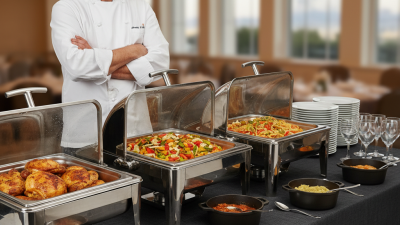
Caterers should match pan depth with transport distance. Shallow pans cool faster, while deep pans may slow serving and increase waste. The FDA Food Code 2022 requires hot time-temperature control foods to remain at 57°C or above, and cold foods at 5°C or below. These limits make compatible lids, chafing equipment, and temperature checks essential. The 2024 Global Foodservice Market report by Research and Markets identifies convenience and operational efficiency as major sector drivers. That sounds persuasive, but efficiency is not automatic. Test one full service cycle before ordering large quantities.
FAQS
Stainless steel is usually the safest all-round choice. It resists rust, repeated washing, and humid kitchen conditions. A 304-grade surface suits many professional kitchens. Appearance matters less than smoothness, durability, and corrosion resistance.
Aluminum transfers heat much more quickly. Its conductivity is about 205 W/m·K. Stainless steel measures roughly 16 W/m·K. This helps aluminum pans heat and cool rapidly. However, aluminum may dent or react with acidic sauces.
Clear plastic pans suit chilled displays and cold storage. Their thermal conductivity is very low, near 0.2 W/m·K. They should not replace oven-rated containers. Scratches can collect residue when cleaning is rushed. That detail is easy to overlook.
Request material certificates, food-contact documents, and batch records. Check the actual steel grade and material thickness. Avoid vague descriptions such as “premium steel.” Independent test results provide useful evidence. One sample proves little.
Measure the existing equipment carefully. Check length, width, depth, rim shape, and stacking clearance. The pan should fit warming units, ovens, trolleys, and storage racks. A small rim difference can interrupt service. Measure twice.
Hot-held food should remain at 57°C or above. Cold food should remain at 5°C or below. Ask for thermal cycling tests using similar conditions. Inspect pans after repeated heating and cooling. Warping may appear later.
Accurate portions can reduce leftovers during service. Secure lids protect food during storage and transport. Clear visibility helps staff monitor remaining portions. Easy cleaning may reduce residue and unnecessary disposal. The connection is practical, but not perfect.
Test several pieces from different production batches when possible. Ten random pieces reveal variation better than one polished sample. Inspect welds, corners, rims, surfaces, and stacking behavior. Also request packaging-drop evidence. Damaged rims create problems early. I might overemphasize testing, but inconsistency can become expensive.
Conclusion
China’s Horeca industry relies on food pans in many forms, including gastronorm pans, steam table pans, perforated pans, sauce pans, and storage containers. Common materials such as stainless steel, aluminum, and food-grade plastic offer different advantages in durability, heat transfer, weight, corrosion resistance, and cost. Standard sizes, depths, shapes, and capacities make it easier for restaurants, hotels, catering companies, and institutional kitchens to organize preparation, cooking, holding, cooling, and service operations.
When evaluating a Horeca Food Pan manufacturer in China, buyers should consider material quality, dimensional accuracy, surface finish, production consistency, customization options, packaging, and quality control. Food safety and hygiene are essential, so pans should be easy to clean, resistant to staining and corrosion, and suitable for professional food contact applications. The best choice depends on the operation: durable metal pans suit hot holding and heavy use, while lightweight plastic options may be practical for storage and preparation. Selecting the correct size and design can improve workflow, reduce waste, and support efficient kitchen management.