Committed to creating high-performance stainless steel composite cookware.

Leave Your Message
Committed to creating high-performance stainless steel composite cookware.
A commercial prep table is a pretty handy piece of equipment that combines refrigerated storage with a sturdy work surface, perfect for those daily food prep tasks. You’ll see these all over—restaurants, cafes, catering kitchens, and even big institutional foodservice setups. Usually, they have ingredient pans tucked underneath or beside a cutting board, making everything accessible. The refrigeration system keeps things cool by pulling heat from the storage area, and fans help circulate cold air around your ingredients. There’s typically a thermostat that keeps an eye on the temperature and kicks the compressor in when things start to warm up.
The workflow with these tables is pretty straightforward. Staff can grab lettuce, sauces, sliced meats, or toppings right from their prep station, without having to run around. It really helps speed things up and keeps the work area cleaner—small details that can make a big difference in busy kitchens. But, here’s the thing—just having a prep table doesn’t automatically mean it’s efficient. If you load it poorly or open the doors too often, airflow can get blocked and the internal temperature might rise. Not all units are created equal either—things like capacity, insulation quality, pan depth, ventilation space, and the heat from the kitchen environment all play a role in how well it works. It’s worth paying attention to these details.
Experienced folks usually check the manufacturer’s instructions, keep an eye on the temperature display, make sure the gaskets are in good shape, and ensure that cleaning access is easy. Using a reliable thermometer to verify the actual temperature inside can be a smart move—sometimes the display isn’t perfectly accurate. This little step can save you from false confidence. And don’t forget, local food safety regulations might influence how you set up, operate, and maintain the unit. When you’re choosing equipment for a busy kitchen, it’s always a good idea to get some professional advice.
All in all, this article breaks down what a commercial prep table is, how its cooling system works, and where it fits in a typical kitchen setup. It also points out some limitations you might not catch just from the product spec sheets. The goal is to pick a unit that supports safe storage, keeps your prep organized, and helps you serve consistently—definitely not just something that looks good in a catalog.
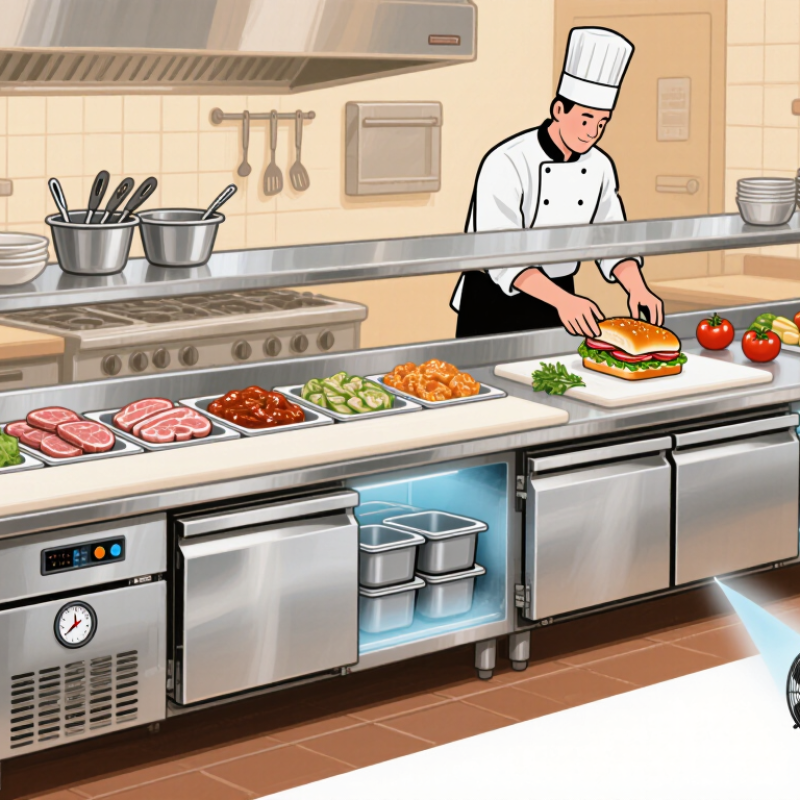
A Commercial Kitchen Prep Table is a purpose-built workstation for preparing food in busy kitchens. It usually combines a stainless steel work surface with storage, refrigeration, or ingredient pans. The design keeps knives, containers, and chilled ingredients within easy reach. This reduces unnecessary movement during chopping, mixing, and portioning. It is more than a table. It supports a repeatable workflow.
Some models hold ingredients in covered pans above the worktop. Others use drawers or cabinets for bulk storage. A refrigerated unit removes heat from an insulated compartment and maintains a selected temperature through a thermostat. Cold air must circulate properly, so overloading the interior can create warm spots. I have seen this happen during rushed service. The table looked organized, but airflow was restricted. That small mistake affected food quality.
Tips: Measure the available space before choosing a Commercial Kitchen Prep Table. Leave room for doors, drawers, cleaning, and ventilation. Check that the work height suits the staff using it. Keep raw and ready-to-eat ingredients separated, and clean spills promptly. A cutting board can protect the surface, although it may make the working height slightly higher. Check temperature readings with a reliable thermometer rather than trusting the display alone. Daily inspection of seals, hinges, and drain areas can reveal problems early. Not every table performs equally in a hot kitchen, so placement matters.
| Dimension | Typical Information | How It Works or Why It Matters |
|---|---|---|
| Primary Function | Food preparation, refrigerated storage, and ingredient organization | The unit combines a stainless-steel work surface with a refrigerated cabinet or ingredient pan compartment, allowing preparation and cold storage in one workstation. |
| Common Table Lengths | Approximately 36–72 inches (91–183 cm) | The required length depends on available floor space, production volume, and the number of ingredients or containers that must remain within reach. |
| Typical Worktop Depth | Approximately 30–36 inches (76–91 cm) | This depth provides usable preparation space while keeping the unit practical for installation along a commercial kitchen wall or work line. |
| Working Height | Generally about 34–36 inches (86–91 cm) | This range supports standing food preparation and is compatible with common commercial kitchen workflow heights. |
| Exterior Material | Commercial-grade stainless steel, commonly type 304 or similar food-service construction | Stainless steel is durable, corrosion-resistant, nonporous, and relatively easy to clean and sanitize when properly maintained. |
| Worktop Design | Flat stainless-steel surface; many models include a raised rear or side edge | The flat surface supports cutting and assembly, while a raised edge can help reduce spills against adjacent walls or equipment. |
| Refrigerated Storage | Insulated undercounter cabinet, drawers, or both | The insulated compartment slows heat transfer, while the refrigeration system removes heat to keep ingredients cold. |
| Ingredient Pan Capacity | Common configurations hold approximately 6–24 food pans, depending on pan size and table length | Top-access pans keep frequently used ingredients close to the preparation area, reducing movement during service. |
| Common Pan Sizes | Full-size, half-size, third-size, sixth-size, and ninth-size food pans | Different pan sizes allow operators to separate ingredients by type, quantity, allergen status, or frequency of use. |
| Temperature Range | Typically maintained at or below 41°F (5°C) for cold food storage when operating correctly | Keeping potentially hazardous foods at 41°F (5°C) or below is a widely used food-safety requirement; local regulations and the applicable food code should always be followed. |
| Refrigeration Cycle | Compressor, condenser, expansion device, and evaporator | Refrigerant absorbs heat inside the cabinet through the evaporator, releases heat through the condenser, and repeats the cycle to maintain the set temperature. |
| Temperature Control | Digital or mechanical thermostat with a temperature display on many models | The control monitors cabinet temperature and cycles the refrigeration system on or off to maintain the selected range. |
| Insulation | Foam-insulated walls, doors, and drawers | Insulation reduces heat entering the refrigerated compartment and helps improve temperature stability and energy efficiency. |
| Door and Drawer Options | Swing doors, sliding doors, drawers, or mixed configurations | Doors provide broad cabinet access, while drawers make individual ingredient containers easier to organize and retrieve. |
| Air Circulation | Fan-assisted airflow in many refrigerated designs | Moving cold air helps distribute temperature more evenly, although overloaded pans or blocked vents can reduce performance. |
| Mobility | Adjustable legs or casters, depending on the configuration | Adjustable legs help level the unit, while lockable casters can support repositioning and cleaning beneath the table. |
| Typical Applications | Pizza assembly, sandwich preparation, salad production, bakery work, and general line preparation | The table keeps preparation tools and chilled ingredients in one compact location, helping streamline repetitive food-production tasks. |
| Cleaning Requirements | Clean and sanitize food-contact surfaces regularly; remove spills from pans, gaskets, shelves, and cabinet interiors | Routine cleaning reduces cross-contamination risk and helps prevent residue from damaging surfaces or restricting airflow. |
| Maintenance Points | Condenser coil, door gaskets, drain system, temperature control, and electrical connections | Keeping the condenser clean, checking seals, and verifying temperatures can support reliable operation and reduce unnecessary energy use. |
| Main Benefits | Space efficiency, organized ingredient access, durable work surface, and temperature-controlled storage | By combining multiple functions, a commercial prep table can reduce unnecessary movement and support consistent food-preparation workflows. |
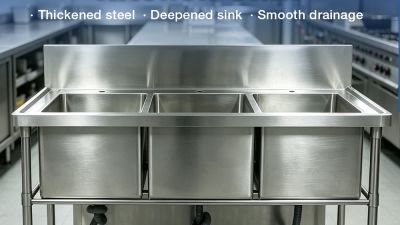
Commercial kitchen efficiency depends on equipment that supports a smooth, hygienic workflow, and the right 3-compartment stainless steel sink plays an important role. A heavy-duty sink with separate bowls allows staff to wash, rinse and sanitize dishes, ingredients and kitchen tools in an organized sequence, reducing cross-contamination risks and unnecessary movement. Deep-drawn compartments provide generous working space for busy restaurants, cafeterias, bakeries, bars and food processing areas, while premium stainless steel offers strong resistance to rust, corrosion and everyday wear.
When choosing a sink, consider its durability, stability and ease of maintenance. An integrated tall backsplash helps prevent water from splashing onto nearby walls, keeping the surrounding area cleaner and drier. A seamless welded structure minimizes places where grease and dirt can collect, making routine cleaning more efficient. Adjustable metal legs help level the unit on uneven floors, and protective anti-slip foot caps improve stability while helping prevent damage to the ground. Pre-fitted drain hoses simplify wastewater discharge, while straightforward assembly reduces setup time. These practical features support dependable performance in high-volume kitchens and help maintain a neat working environment during demanding service periods.
It combines a durable work surface with organized storage. Ingredients stay close during busy preparation.
Stainless steel resists corrosion and absorbs little moisture. Reinforced supports reduce movement under heavy bowls or ingredient bins.
Drawers hold measuring tools and wraps. Open shelves keep pans visible, while cabinets protect containers from dust and splashes.
A full-length undershelf stores large containers. However, overcrowding can block cleaning access and hide spills.
The compressor, condenser, evaporator, and thermostat remove heat. Insulation and tight door seals help retain cold air.
Blocked vents restrict airflow. Frequent door opening also extends compressor operation and slows temperature recovery.
Remove scraps and containers first. Wash with approved detergent, rinse when required, then apply sanitizer as directed.
Keep the cabinet commonly at 41°F (5°C) or below, unless local rules differ. Store raw foods below ready-to-eat foods.
Inspect gaskets, drains, vents, condenser areas, caster locks, and leveling feet. Disconnect power before servicing accessible parts.
No. A rushed wipe only moves contamination. Staff still need cleaning, sanitizing, temperature checks, and better attention.
A Commercial Prep Table is a professional workstation designed to make food preparation faster, cleaner, and more organized. It typically combines a durable work surface with built-in storage, such as cabinets, drawers, shelves, or compartments for ingredients, utensils, and small equipment. Some models may also include refrigerated sections to keep perishable foods at safe temperatures while they are being prepared. By placing essential tools and ingredients within easy reach, the table supports an efficient workflow from washing and cutting to assembling and portioning food.
Commercial Prep Table varieties serve different professional needs, including general preparation, refrigerated ingredient storage, and specialized tasks such as sandwich or salad assembly. To maintain hygiene and performance, users should clean and sanitize all surfaces regularly, remove food debris, check seals and drainage areas, and store ingredients properly. Routine inspections and careful temperature control help reduce contamination risks, extend the table’s service life, and support consistent food safety practices.