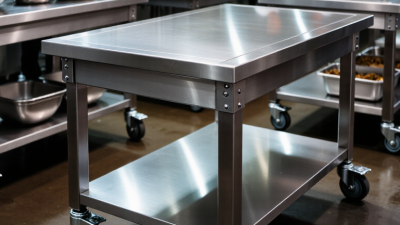
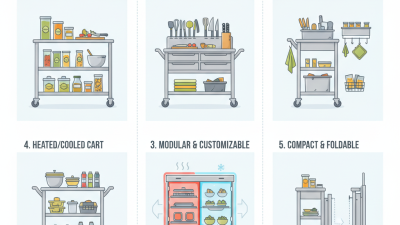
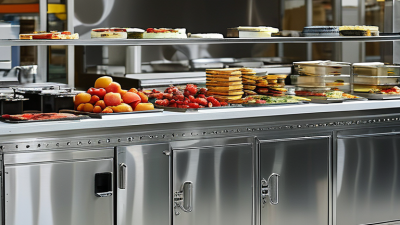
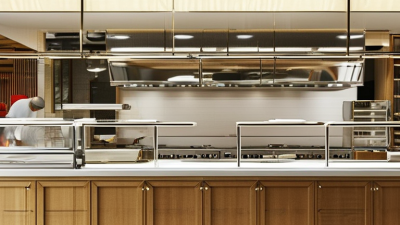
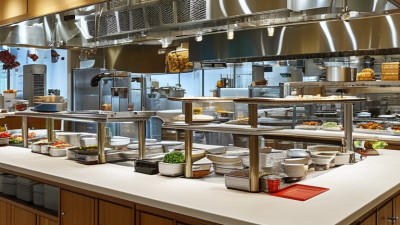
Picking an industrial stainless steel table isn’t just about comparing prices, sizes, and how shiny the surface looks. Really, it’s a practical decision about hygiene, workflow, durability, and long-term operating cost. A table can look great in a catalog and then feel wobbly as hell next to a busy prep line. The little things matter—welded corners, adjustable feet, undershelves, backsplash height, edge construction, all of it.
Food-safety consultant Robert W. Powitz, Ph.D., has a principle I like: “If equipment cannot be cleaned easily, it cannot support safe food handling.” That should be the filter for every purchase, honestly. Look for stainless steel with the right corrosion resistance—usually Type 304 for tough foodservice environments. Type 430 can save money up front, but it may act differently around salt, moisture, and harsh cleaners. What you choose should come down to how you’ll actually use it.
A good supplier should be able to explain those differences without dodging the question. Companies like John Boos & Co., Eagle Group, and Advance Tabco show how pro equipment gets specified for commercial kitchens. But brand reputation alone won’t save you. Check load capacity, gauge thickness, NSF certification, delivery access, and warranty terms.
Measure twice. Seriously.
And think about the person using it, too. A baker might need a deep, rigid surface, while a restaurant line might need undershelf clearance and easy sanitation. Stainless Steel Industrial Food Equipment should support the whole workflow, not just sit there looking pretty. There’s no perfect table. I once underestimated cleaning access, and that narrow gap turned into a stubborn maintenance headache. Lesson learned. A careful comparison can keep you from replacing stuff too soon and make daily work safer, faster, and a lot less annoying.
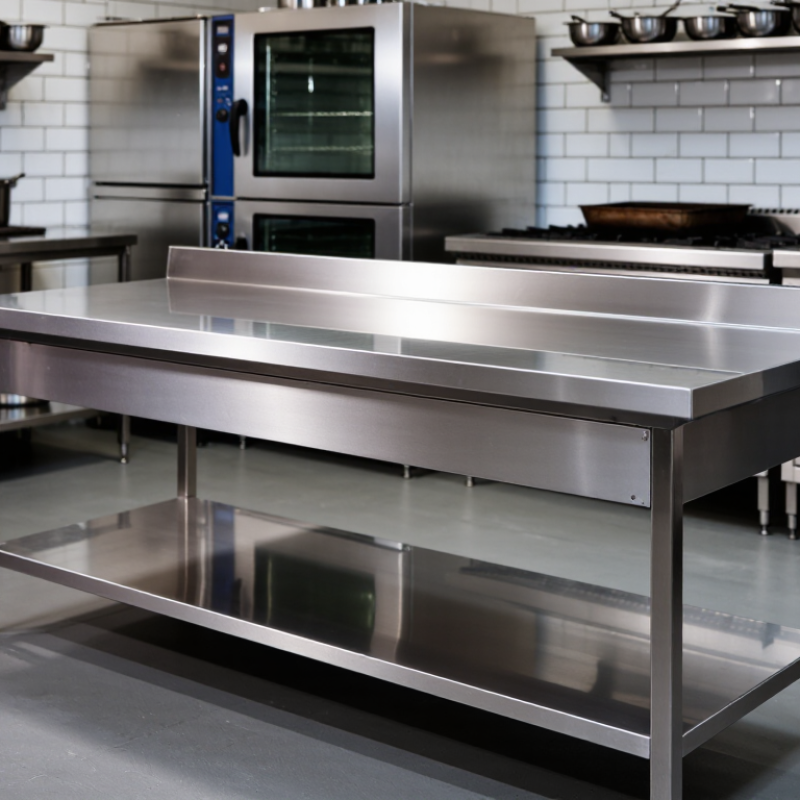
Understanding Industrial Stainless Steel Table Types
Understanding Industrial Stainless Steel Table Types
Choosing an industrial stainless steel table starts with its working role, not its appearance. A flat work table suits plating, equipment support, and light preparation. A table with an undershelf adds storage for pans, containers, and cleaning tools. In narrow production areas, a wall-mounted table can protect valuable floor space. It is less flexible, though.
Sink tables support washing, rinsing, and waste control. Look for deep bowls, raised edges, adjustable legs, and properly placed drains. Prep tables may include drawers, cutting boards, or refrigerated compartments. Mobile tables add casters, but they need reliable brakes. Otherwise, a heavy mixer can move during use. That detail is easy to underestimate.
Material grade also matters. Food-contact areas commonly require smooth, durable, nonabsorbent, and easily cleanable surfaces under the 2022 FDA Food Code. The World Stainless Association reported approximately 58.4 million tonnes of global crude stainless steel production in 2023. That scale reflects broad industrial use, but it does not make every table suitable for every environment. A 304-grade surface often fits general food preparation, while harsher chemical or salt exposure may justify a more resistant grade. Confirm the actual alloy and thickness with the supplier. Specifications can be vague. Weld quality, corner design, load capacity, and cleaning access deserve equal attention. A table can look strong and still fail at its joints.
Identifying the Right Stainless Steel Grade
Choosing an industrial stainless steel table begins with its working environment, not its appearance. The International Stainless Steel Forum reported 58.4 million tonnes of crude stainless steel production in 2023. That scale reflects its importance, but every grade behaves differently.
For general food preparation, 304 stainless steel is usually a practical choice. It handles moisture, cleaning chemicals, and daily abrasion well. In coastal kitchens or areas exposed to salt, 316 grade offers stronger chloride resistance because it contains molybdenum. However, 316 is not automatically better for every table. Its higher cost may bring little value in a dry storage room. Grade 430 can suit low-corrosion interiors, but it usually provides less resistance than 304. The NACE IMPACT study estimated global corrosion costs at 3.4% of worldwide GDP, reminding buyers that early material decisions can become expensive maintenance problems.
Tips: Ask for the material certificate, not only a “stainless” label. Check whether the tabletop, legs, fasteners, and welds use the same grade. A table beside an Industrial Keg may face condensation, acidic spills, and frequent washing. Inspect weld finishing closely; rough seams can trap residue. Surface finish matters too. A smooth, properly finished surface cleans more reliably. I have seen buyers focus on thickness alone, then overlook chloride exposure. That is an easy mistake. Grade selection should also consider temperature, cleaning chemicals, load, and ventilation.
How to Choose an Industrial Stainless Steel Table? - Identifying the Right Stainless Steel Grade
Typical composition ranges and practical selection guidance based on commonly specified stainless steel grades. Exact limits may vary by applicable material standard and product form.
| Grade |
Typical Chemical Composition (wt.%) |
Metallurgical Structure |
Magnetism |
Corrosion Resistance |
Recommended Table Applications |
Main Limitations |
| 304 |
Cr: 18–20
Ni: 8–10.5
Mo: Not intentionally added |
Austenitic |
Generally nonmagnetic when annealed; may become slightly magnetic after cold working |
Good resistance to atmospheric corrosion, moisture, and many food-related environments |
General food preparation, commercial kitchens, packaging areas, laboratories, and indoor industrial workstations |
Less suitable than 316 for sustained exposure to chlorides, salt spray, or concentrated cleaning chemicals |
| 316 / 316L |
Cr: 16–18
Ni: 10–14
Mo: 2–3 |
Austenitic |
Generally nonmagnetic when annealed; may become slightly magnetic after cold working |
Very good resistance to chlorides, salt-containing atmospheres, and many chemical-processing environments |
Coastal facilities, seafood processing, medical and pharmaceutical areas, chemical handling, and frequent washdown zones |
Higher material cost; not immune to pitting or corrosion in severe chloride exposure or stagnant contaminated areas |
| 430 |
Cr: 16–18
Ni: Usually not intentionally added
Mo: Not intentionally added |
Ferritic |
Magnetic |
Moderate resistance to indoor atmospheric corrosion and oxidation; lower chloride resistance than 304 |
Dry indoor work areas, equipment enclosures, backsplashes, decorative panels, and applications requiring magnetic response |
Reduced weldability and formability compared with austenitic grades; unsuitable for frequent wet or salty exposure |
| 201 |
Cr: 16–18
Ni: 3.5–5.5
Mn: 5.5–7.5 |
Austenitic |
Usually nonmagnetic when annealed; may become magnetic after cold working |
Moderate resistance in mild indoor environments; generally below 304 in demanding service |
Cost-sensitive indoor tables, light-duty fabrication, dry work areas, and applications with limited chemical exposure |
Not the preferred choice for marine, high-chloride, acidic, or continuously wet environments |
Choose 304 for general use
A practical default for most indoor food-service, workshop, and industrial table applications.
Choose 316 or 316L for chlorides
Select this grade when salt, seawater, brine, aggressive cleaning agents, or frequent washdown is expected.
Consider 430 for dry indoor areas
Use it where magnetic properties and cost matter more than high wet-environment corrosion resistance.
Verify the surface finish
A smooth, properly finished surface, sealed welds, and regular cleaning help reduce staining and contamination retention.
Choosing Suitable Dimensions and Load Capacity
Choosing an industrial stainless steel table starts with the work, not the catalogue photograph. Measure the largest container, tool, and movement zone. Leave at least 150 mm of clearance around frequently handled items. An Industrial Milk Pail may need extra depth to prevent unstable edge placement.
NIOSH’s Revised Lifting Equation uses a 51-pound load constant before reach, height, frequency, and twisting reduce the recommended lifting limit. This figure is not the table’s safe capacity. It shows why a deep table can create excessive reaching. For manual handling, keep heavy loads near the worker’s body and specify a working height that avoids prolonged bending. Test the actual setup with filled containers, not empty samples. That detail is often missed.
Check both uniformly distributed load and concentrated load ratings. A 300-kilogram rating may describe an evenly spread surface, while one heavy vessel stresses a small area. Ask for the test method, support spacing, and deflection limit. Tables with undershelves also need clearance for buckets and cleaning access. FDA Food Code 2022 requires food-contact surfaces to be smooth, durable, and nonabsorbent; welded corners support that requirement when properly finished. I would still inspect every seam by hand. Small flaws become large hygiene problems. Mobile tables require additional attention: casters reduce practical stability, especially during sudden pushing or uneven floor contact. Choose dimensions and capacity from measured tasks, verified documentation, and real operating conditions.
Evaluating Table Features and Workplace Ergonomics
How to Choose an Industrial Stainless Steel Table?
Choosing an industrial stainless steel table starts with the worker, not the sheet thickness. A table can be hygienic yet tiring. The U.S. Bureau of Labor Statistics reports that musculoskeletal disorders account for about one-third of private-industry cases involving days away from work. This makes posture a practical purchasing issue, not a cosmetic preference.
Measure the main task before selecting table height. Precision assembly often needs a higher surface, while cutting or packing may require a lower position. Adjustable legs can support different users, although adjustment mechanisms may complicate cleaning. Keep frequently used tools within easy reach, and avoid forcing workers to lean across deep surfaces. NIOSH ergonomic guidance emphasizes reducing awkward postures, excessive reaching, and repetitive force. Rounded edges, stable feet, and smooth welds also reduce contact pressure and cleaning problems. Small details matter.
Check knee clearance when workers sit. For standing work, leave enough foot space beneath the frame. A lower shelf improves storage, but it can block movement and invite awkward twisting. Load capacity should reflect real equipment, not an ideal estimate. Include containers, liquids, and sudden impacts. The table’s height, depth, mobility, and surface finish should match the task rhythm. In practice, I would test a sample for one shift. A specification sheet cannot reveal every shoulder strain or cleaning inconvenience. The best choice may still need revision after observing real users.
Checking Hygiene, Safety, and Cleaning Requirements
When choosing an industrial stainless steel table, start with hygiene, not appearance. A bright surface can still hide residue around welds, corners, and adjustable feet. Choose a smooth, non-porous worktop with rounded edges whenever possible. Fewer seams mean fewer places for moisture and food particles to collect. In busy kitchens, even a small gap becomes difficult to inspect during a rushed cleaning shift.
Check the table’s height, stability, and load capacity before installation. A shaking table can spill hot liquids or move during cutting, creating avoidable injuries. Locking casters should hold firmly, while fixed legs need levelers for uneven floors. Leave enough space underneath for cleaning tools and visual inspection. I used to think an Industrial Mixing Bowl only needed a strong surface, but workflow matters too. A crowded table encourages unsafe stacking and careless handling.
Cleaning requirements should match the daily routine. Stainless steel usually tolerates warm water and mild detergent, but harsh chemicals or abrasive pads may damage the finish. Follow the supplier’s care instructions, then rinse and dry the surface completely. Pay close attention to the underside, splash zones, and areas behind the Industrial Mixing Bowl. Inspect welds every week. They may look clean while retaining a thin film. That detail is easy to miss, and I still consider it a weakness in many cleaning checks. Documenting inspections also helps staff notice repeated problems before they become hygiene risks.
Comparing Installation, Mobility, and Long-Term Value
Choosing an industrial stainless steel table starts with the work area, not the catalogue. In my experience, a Stainless Steel Prep Table performs best when installation matches daily movement. A fixed table suits a production line with established stations. Adjustable feet help level it on uneven floors and reduce rocking during chopping or mixing. Measure doorways, drains, wall clearance, and equipment height before ordering. Small gaps matter. A table blocking a service panel becomes expensive to reposition.
Mobility changes the calculation. Locking casters let staff move a table for cleaning, deliveries, or sudden workflow changes. They also add height and require regular inspection. Casters must roll smoothly, lock firmly, and support the loaded table, not only its empty frame. I have seen operators choose wheels for convenience, then dislike movement during heavy preparation. That choice was not entirely wrong. It needed stronger locks and a clearer floor plan. Fixed legs usually provide better stability and lower purchase costs.
Long-term value depends on construction, maintenance, and replacement access. Look for a clear load rating, welded joints, corrosion-resistant surfaces, and replaceable hardware. Do not judge quality by shine alone. Daily wiping removes residue, while prompt drying limits water marks near seams. Harsh cleaners can damage finishes, despite good steel. A cheaper table may save money initially but lose value through bent legs, loose casters, or difficult cleaning. Record its dimensions and service parts before installation. Future maintenance rarely follows the original plan.
Smart Hotel Luggage Storage: Choosing a Stainless Steel Folding Tray Rack for Guest Rooms
As international travel continues to recover, guest-room organization has become an important part of the hotel experience. UN Tourism’s *World Tourism Barometer* reported approximately 1.3 billion international arrivals in 2023, reaching about 88% of 2019 levels, while the GBTA *Business Travel Index Outlook* projected global business-travel spending of $1.48 trillion for 2024. These figures highlight the need for practical in-room luggage solutions that support frequent arrivals, departures, and changing guest needs without taking up permanent floor space.
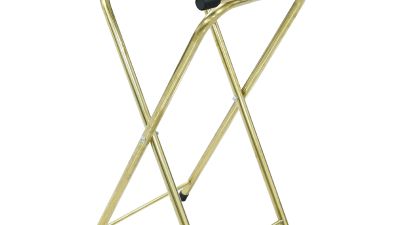
When choosing a stainless steel folding tray rack, hotels should prioritize durability, load capacity, and compact storage. A rack made from thickened 201 stainless steel offers stronger corrosion resistance and easier cleaning than many plastic or wooden alternatives. With three stepped tiers and a static capacity of up to 15 kg per tier, it can hold suitcases, folded garments, blankets, or room-service items while reducing the need for guests to bend down. The rack should also fold to approximately 5 cm thick, allowing housekeeping teams to store it beneath beds, behind doors, or beside wardrobes when rooms require more open space.
Guest safety and noise control are equally important. Rounded, rolled edges help protect hands and fabrics, while non-slip silicone feet reduce movement, floor scratches, and unwanted noise on tile or wood surfaces. Multiple size options make it easier to match different room layouts, from compact urban rooms to spacious suites, while the brushed and polished surface supports quick wiping between stays. Its flexible design can serve as a bedside valet, entryway parcel stand, or temporary preparation station during outdoor events.
FAQS
A flat work table supports plating, equipment, and basic preparation. It offers little storage. Add an undershelf for pans, containers, and cleaning tools.
It suits narrow production areas where floor space is limited. Measure carefully before installation. Its fixed position reduces flexibility.
Choose deep bowls, raised edges, adjustable legs, and correctly positioned drains. These features support washing, rinsing, and waste control.
General food preparation often suits 304-grade stainless steel. Salt or chemical exposure may require a more resistant grade. Confirm the alloy and thickness with the supplier.
Select smooth, non-porous surfaces with rounded edges and few seams. Inspect welds, corners, feet, undersides, and splash zones. Small gaps can hold residue.
Mobile tables improve cleaning access and workflow changes. Locking casters must hold the loaded table firmly. Otherwise, a heavy mixer may shift during use.
Measure doorways, drains, wall clearance, service panels, and equipment height. Use adjustable feet on uneven floors. Measure twice. A blocked service panel creates future trouble.
Use warm water and mild detergent unless the supplier states otherwise. Avoid abrasive pads and harsh chemicals. Rinse and dry the surface, especially near seams.
Consider welded joints, load capacity, corrosion resistance, replaceable hardware, and cleaning access. A shiny finish proves little. I may have underestimated service-part availability before.
Yes. Record dimensions, service parts, caster condition, and weekly weld inspections. Documentation reveals repeated problems. It is simple, but often neglected.
Conclusion
Choosing the right Industrial Stainless Steel Table requires more than comparing prices or appearances. Start by identifying the table type that fits your operation, such as a work table, preparation table, undershelf model, or mobile unit. Select a stainless steel grade based on the working environment, considering exposure to moisture, chemicals, heat, and heavy use. Accurate measurements are also essential, so evaluate the available space, working height, surface area, and required load capacity before purchasing.
A suitable table should support efficient movement and comfortable working posture while offering practical features such as adjustable shelves, drawers, backsplashes, casters, or reinforced legs. Hygiene and safety should remain priorities: choose smooth, easy-to-clean surfaces with minimal dirt-collecting gaps and stable construction. Finally, compare assembly requirements, mobility, maintenance needs, and expected service life. A well-selected Industrial Stainless Steel Table can improve workflow, cleanliness, durability, and long-term value in professional work environments.