Committed to creating high-performance stainless steel composite cookware.

Leave Your Message
0%

Choosing a top stainless steel supplier in China isn’t just about comparing prices in a catalog. When it comes to a reliable Stainless Steel Work Table With Wheels, you really want something that can handle daily prep work, cleaning, and constant moving around. Let's face it— in a busy commercial kitchen, that loaded table might have to squeeze through narrow aisles, wet floors, and crowded spots. Its real performance? That’s often about the little details that photos don’t always show.

Michael Chen, who’s been working as a foodservice equipment engineer for over 18 years — with plenty of hands-on factory and kitchen experience — puts it simply: “A mobile table earns trust when it moves smoothly, has clean welds, and can handle predictable loads.” That kind of practical insight is gold. When shopping, you should look into the stainless steel grade, the thickness of the tabletop, how sturdy the undershelf is, the finish on the edges, and the quality of the casters. For high-demand food service settings, Grade 304 stainless steel is the way to go, while Grade 430 might be okay for less harsh environments with lower corrosion risks. Make sure your supplier explains these differences clearly.

A good manufacturer also provides solid proof. Don’t hesitate to ask for load test reports, welding inspection docs, material certificates, or even photos of the production process. And check if the work table with caster wheels features locking swivel casters, reinforced mounting plates, and replaceable parts. A table that rolls smoothly when it’s empty might not perform so well under 250 kilograms of equipment—real use often reveals issues you didn’t see before.

No supplier is perfect, and even a well-made table can get scratched, have uneven brakes, or develop alignment issues after heavy use. So, it’s smart to pay attention to warranty details, the availability of spare casters, how the packaging is done, and how responsive they are after the sale. Many honest Chinese manufacturers can customize your order to some extent, but always verify their promises with samples, site visits, and clear specs. Remember, a Stainless Steel Work Table With Wheels isn’t just about the product — it’s about mobility, hygiene, safety, and confidence in the long run.
China Top Stainless Steel Work Table With Wheels Supplier

What Is a Stainless Steel Work Table With Wheels?

China Top Stainless Steel Work Table With Wheels Supplier

What Is a Stainless Steel Work Table With Wheels?

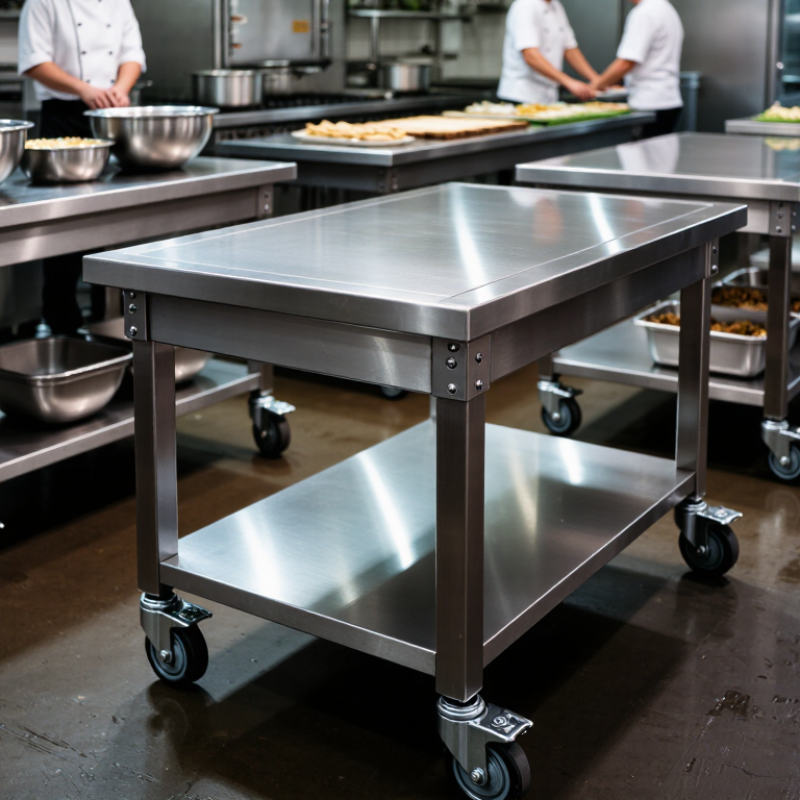
A stainless steel work table with wheels is a mobile preparation surface for commercial kitchens, workshops, and service areas. It combines a welded or assembled steel tabletop with locking casters. The wheels allow staff to reposition the table, while brakes stabilize it during cutting, mixing, or equipment loading.

The surface usually uses food-grade stainless steel, often in 430 or 304 grades. Grade 304 offers stronger corrosion resistance around moisture, salt, and cleaning chemicals. A typical table may include an undershelf, rounded edges, adjustable feet, and a rear upstand.

These details matter. A thin tabletop can vibrate under pressure. Poorly sealed joints may collect residue. The word “hygienic” should never be accepted without inspection.

The National Restaurant Association’s 2024 industry report projected U.S. restaurant sales above 1 trillion dollars and employment near 15.7 million workers. That scale increases demand for movable, cleanable work surfaces. A mobile table can support changing kitchen layouts and reduce unnecessary lifting. However, wheels do not solve every workflow problem. Small casters may struggle on uneven floors, while weak brakes create safety concerns. A service trolley with brake wheels can improve mobility, but it is not identical to a work table. Buyers should check load capacity, caster diameter, weld quality, and compliance with applicable sanitation standards. A practical test is simple: roll it, lock it, and clean every joint.

Key Features of Mobile Stainless Steel Work Tables

China Top Stainless Steel Work Table With Wheels Supplier

Key Features of Mobile Stainless Steel Work Tables

A mobile stainless steel work table must support hygiene, stability, and fast movement. The World Health Organization estimates that contaminated food causes 600 million illnesses annually. It also links foodborne disease to about 420,000 deaths each year. These figures make cleanable surfaces more than a purchasing preference. They are a practical risk-control measure.

A reliable table uses corrosion-resistant stainless steel, sealed welds, and a smooth worktop. The FDA Food Code 2022 emphasizes durable, nonabsorbent, and easily cleanable food-contact surfaces. Rounded corners reduce residue buildup around the edges. A raised backsplash can help protect walls from splashes. However, thin sheet metal may flex under heavy equipment. I would check the stated load rating, not trust appearance alone.

Mobility depends on more than four casters. Locking swivel wheels should hold the table firmly during chopping or mixing. The wheel diameter matters on uneven floors. A lower shelf can store pans, while adjustable feet improve balance during fixed work. In smaller kitchens, a kitchen trolley with wheels can move between preparation, service, and cleaning zones. It should still pass through doorways comfortably. One overlooked detail is maintenance: wheel locks collect grease and debris. Regular inspection remains necessary, even with a well-designed table.

Common Materials and Construction Standards

China Top Stainless Steel Work Table With Wheels Supplier

For commercial kitchens, stainless steel work tables with wheels need more than a bright surface. Material choice controls hygiene, strength, and service life. Most reliable tables use 304 stainless steel for tops, legs, and undershelves. It resists moisture, food acids, and frequent cleaning. In coastal or chemical-heavy environments, 316 stainless steel offers better corrosion resistance. It costs more. That trade-off deserves careful review. Lower-cost 430 stainless steel may suit dry storage areas, but it needs stronger protection from rust.

Construction details matter just as much. A reinforced tabletop should resist bending under mixers, containers, and daily preparation loads. Rounded edges reduce dirt traps and improve operator safety. TIG-welded joints create cleaner connections when grinding and polishing are properly controlled. Adjustable feet can stabilize the table, while locking casters should roll smoothly and hold firmly during use. Small details matter.

Food-service designs often reference NSF/ANSI 2 or comparable local hygiene requirements. Suppliers should provide material grades, thickness records, weld inspection results, and caster load ratings. A 1.2-millimeter top may perform well, but support spacing and frame design also affect durability. In practice, even a well-specified table can disappoint. A polished weld may hide a weak joint. A certificate alone does not prove every unit is consistent. Practical inspection remains essential: check corners, underside seams, wheel brakes, and surface flatness before shipment.

China Top Stainless Steel Work Table With Wheels Supplier - Common Materials and Construction Standards

Component or Specification Common Material or Requirement Typical Grade or Dimension Relevant Construction Standard Practical Application
Worktop Surface Austenitic stainless steel with a smooth, cleanable finish Type 304 stainless steel; 0.8–1.5 mm sheet thickness ASTM A240 / EN 10088-2 Suitable for general food preparation, commercial kitchens, laboratories, and light industrial work areas.
Corrosion-Resistant Worktop Higher molybdenum stainless steel for environments exposed to salt or chlorides Type 316 or 316L stainless steel; commonly 0.8–1.5 mm sheet thickness ASTM A240 / EN 10088-2 Recommended for coastal locations, seafood processing, medical environments, and chemical handling areas.
Surface Finish Brushed or satin stainless steel finish with a uniform appearance Commonly No. 4 finish; approximately 120–180 grit abrasive finish ASTM A480 / EN 10088-2 Helps reduce visible scratches and provides a practical surface for routine cleaning.
Tabletop Reinforcement Stainless steel channels, folded edges, or welded support members Reinforcement spacing commonly 300–600 mm, depending on tabletop size and load Welded, rigid, and hygienic construction Limits tabletop deflection and improves stability during cutting, mixing, or equipment placement.
Legs and Frame Stainless steel round tubing, square tubing, or formed sections Typical tube diameter: 38–50 mm; wall thickness: about 1.0–1.5 mm ASTM A554 / EN 10217-7 Provides structural support while maintaining corrosion resistance and ease of cleaning.
Adjustable Feet Stainless steel threaded feet with hygienic polymer or rubber pads Typical adjustment range: 20–40 mm Leveling and load distribution Compensates for uneven floors and can be used when the table is stationary.
Swivel Casters Non-marking polyurethane or thermoplastic rubber wheels with stainless steel fittings Common wheel diameter: 100–125 mm; two or four casters may include brakes EN 12527 / EN 12531 testing principles Supports mobile use and allows the table to be repositioned for cleaning or workflow changes.
Caster Brakes Total-lock or wheel-lock braking system At least two locking casters are commonly used on mobile work tables Secure positioning requirement Reduces unintended movement during food preparation, assembly, or equipment operation.
Typical Table Height Ergonomic standing-work configuration Common fixed height: 850–900 mm, excluding caster height variations Ergonomic design range Suitable for most standing preparation and light manufacturing tasks.
Typical Tabletop Depth Single-sided or double-sided work surface Common depths: 600, 700, or 750 mm Configured to available workspace Balances usable work area with aisle clearance and operator access.
Typical Tabletop Length Modular stainless steel workbench format Common lengths: 900, 1200, 1500, 1800, or 2000 mm Made-to-order dimensional tolerance Allows the work table to be selected according to room layout and required production capacity.
Welded Joints Continuous TIG welding followed by grinding and polishing where required Seams should be smooth, closed, and free from sharp projections Hygienic fabrication practice Reduces dirt traps and helps prevent moisture accumulation around structural joints.
Edges and Corners Folded edges with rounded or softened corners Typical folded edge height: approximately 40–100 mm, when a rear or side upstand is specified Smooth, safe, and cleanable design Improves operator safety and helps prevent liquids or ingredients from falling off the work surface.
Load Capacity Depends on tabletop gauge, reinforcement, frame design, caster rating, and load distribution Common light-to-medium-duty range: approximately 150–300 kg evenly distributed Supplier verification required Load ratings should be confirmed through product testing and should not be exceeded during mobile use.
Cleaning and Hygiene Non-porous stainless steel surfaces with accessible joints and minimal dirt-retaining gaps Use food-safe cleaners; avoid chloride-rich cleaners and steel wool EHEDG hygienic design principles Supports routine sanitation and helps maintain the appearance and service life of the stainless steel.

Note: Dimensions, load ratings, caster configurations, and material thicknesses vary by design. Final specifications should be confirmed against the approved product drawing and applicable local regulations.

Types of Stainless Steel Work Tables With Wheels

China Top Stainless Steel Work Table With Wheels Supplier

Stainless steel work tables with wheels support mobile preparation, plating, and cleaning routines. Common types include flat-top tables, undershelf tables, drawer tables, and sink workstations.

Flat-top models suit dough, vegetables, and equipment staging. Undershelf tables add storage for pans and sealed containers.

Drawer models keep small tools away from splash zones. Sink combinations help separate washing from preparation.

The World Health Organization reports that contaminated food causes about 600 million illnesses yearly. It also links these incidents to roughly 420,000 deaths.

Therefore, surface design matters. An Nsf Stainless Steel Work Table should use smooth, corrosion-resistant steel and stable casters. The 2022 FDA Food Code emphasizes cleanable surfaces and suitable equipment construction.

In practice, welded corners reduce residue traps. However, a polished table can still fail when its wheels wobble or its underside stays damp. I once underestimated that detail. Mobility is useful, but poor locking control creates safety concerns.

Tips:

Choose swivel casters with brakes for busy kitchens. Check the table’s load rating before adding appliances. Measure doorways and turning spaces first. Prefer adjustable feet or reinforced frames when floors are uneven. Ask suppliers for material grade, weld quality, caster specifications, and sanitation documentation. Some buyers focus only on thickness. That can be a mistake. Surface thickness, frame strength, and daily cleaning access must work together.

How to Select a Reliable China Supplier

China Top Stainless Steel Work Table With Wheels Supplier

Selecting a reliable China supplier requires more than comparing prices. Inspect their factory experience, production equipment, and quality control process. Ask for stainless steel grades, material thickness, welding methods, and caster specifications. A dependable supplier should explain each detail clearly. For a Hotel Stainless Steel Work Table, check load capacity, adjustable feet, edge finishing, and wheel locking performance. Request a sample before placing a large order. Photograph the table from several angles. Small defects often appear near welds and corners.

I once reviewed a supplier whose catalog looked excellent, but the sample had uneven polishing. That changed the evaluation completely. Request recent production photos, inspection records, and references from commercial kitchen buyers. Confirm measurements in writing, including tabletop height, shelf spacing, and packaging size. Independent inspection can verify material, dimensions, and surface quality before shipment. Communication also matters. Slow replies may create costly misunderstandings later. Do not rely only on a low quotation. Cheap casters or thin steel can reduce service life.

Tips: Compare at least three suppliers. Ask for a written quotation. Check whether replacement wheels are available. Clarify warranty terms and delivery responsibilities. Visit the factory when practical. If travel is impossible, arrange a live video inspection. Keep every specification documented. Recheck your own requirements, too. A missing detail can become an expensive correction.

Manufacturing and Quality Control Processes

China Top Stainless Steel Work Table With Wheels Supplier

Manufacturing and Quality Control Processes

Reliable stainless steel work tables begin with material verification, not appearance. We check mill certificates, thickness, grade, and surface condition before cutting. Type 304 stainless steel suits most food-service environments. Type 316 may better resist chlorides and harsh cleaning agents. The FDA Food Code 2022 requires food-contact surfaces to be smooth, durable, corrosion-resistant, and easily cleanable. Our welding process minimizes crevices around corners, undershelves, and caster mounts. Each weld is inspected for cracks, pinholes, and uneven finishing.

Quality control continues after fabrication. Workers measure tabletop flatness, leg alignment, shelf spacing, and wheel stability. We test casters under the specified working load, including brake performance on slightly uneven floors. This detail matters because WHO estimates that contaminated food causes about 600 million illnesses worldwide each year. A cleanable table cannot remove every risk, but poor design can increase it. We sometimes discover small deviations during final inspection. They are inconvenient, yet useful reminders that visual polishing is not enough. Records should include inspection dates, measurements, corrective actions, and inspector approval.

Tips: Ask for material certificates and a written load rating. Check whether the casters have locking brakes. Request photos of weld finishing and underside areas. Confirm the cleaning chemicals used at your facility. Overlooked details can shorten service life.

Applications and Maintenance Requirements

China’s stainless steel work tables with wheels support prep rooms, bakeries, catering lines, and compact commercial kitchens. Their mobility helps staff reposition equipment during cleaning or service changes. Locking casters are essential near sinks, ovens, and busy walkways. A 304 stainless surface suits many food-preparation areas, but it still needs correct care. Scratches, salt, and standing water can damage its passive protective layer.

The World Health Organization estimates that contaminated food causes about 600 million illnesses annually. The FDA Food Code 2022 therefore emphasizes cleanable surfaces, proper cleaning, and cross-contamination control.

Operators should wash the tabletop after raw meat, seafood, or allergen handling. Use warm water, a neutral detergent, and a clean, soft cloth. Rinse chemical residue thoroughly. Dry the surface completely, especially around welded joints and caster mounts.

Chloride-rich cleaners may create pitting. This detail is often missed. A clean-looking table can still hide residue beneath its lower shelf.

Tips: Lock all wheels before work. Keep the table away from direct flame. Do not drag it across uneven floors.

Inspect casters weekly for grease, cracks, and trapped food particles. Replace damaged wheels quickly. NSF/ANSI 2 guidance supports smooth, cleanable food-equipment surfaces, yet real kitchens remain imperfect.

Maintenance logs help reveal repeated problems, such as loose bolts or water pooling after washing. A simple weekly inspection can prevent a small defect from becoming an expensive interruption.

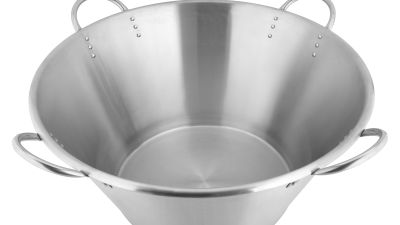
Food-Grade Stainless Steel Cazos: Deep Cooking for Frying, BBQs, and Large Cookouts

Food-grade stainless steel cazos bring dependable performance to frying, barbecuing, and large outdoor cookouts. Their deep design provides ample room for generous portions while helping reduce splashes during cooking. Whether you are preparing crispy chicken, seasoned vegetables, seafood, or other favorite fried dishes, the tall interior makes handling larger quantities more convenient. Stainless steel also offers a smooth, durable surface that is easy to clean and resistant to rust, making these cazos a practical addition to busy kitchens and outdoor cooking areas.

Designed for more than frying, these versatile cooking vessels can also be used for steaming, simmering, and preparing hearty stews. The sturdy construction supports high-temperature cooking, while the deep shape encourages steady heat distribution for consistent results. They are especially useful for family reunions, neighborhood barbecues, holiday gatherings, and other occasions where several servings must be prepared efficiently. From keeping food warm beside the grill to cooking a substantial meal over an outdoor burner, food-grade stainless steel cazos combine capacity, durability, and everyday versatility for cooks who enjoy serving a crowd.

FAQS

What makes a mobile stainless steel work table suitable for food preparation?

It should have a smooth, nonabsorbent surface and corrosion-resistant stainless steel. Sealed welds reduce hidden residue. Rounded corners help cleaning. Appearance can mislead.

Which stainless steel grade is usually appropriate?

Type 304 suits many food-service areas. Type 316 may resist chlorides and harsh cleaners better. The correct choice depends on cleaning chemicals and exposure. Do not guess.

How important is the table’s load rating?

Very important. Thin metal can flex under mixers, ovens, or stacked pans. Check the written working load. Test results matter more than a polished surface.

What should I check about the casters?

Choose locking swivel casters with stable brakes. Larger wheels move more easily across uneven floors. Inspect them weekly for grease, cracks, and trapped food. Small parts fail too.

How can the table remain stable during work?

Lock every wheel before chopping or mixing. Adjustable feet can improve balance during fixed tasks. A lower shelf may add storage, but it can also hide residue.

How should the worktop be cleaned?

Remove food debris first. Wash with warm water and a neutral detergent. Rinse thoroughly, then dry around welds and caster mounts. Keep it dry.

Can harsh cleaners damage stainless steel?

Yes. Chloride-rich products may cause pitting and surface damage. Salt and standing water can weaken the protective layer. A clean appearance does not prove safe care.

What quality checks should a supplier provide?

Request material certificates, thickness records, and a written load rating. Ask for weld photos, including underside areas. Inspect flatness, leg alignment, shelf spacing, and brake performance. Records should show corrections.

Where are mobile work tables most useful?

They suit preparation rooms, bakeries, catering lines, and compact commercial kitchens. Staff can move them between preparation, service, and cleaning zones. Doorway clearance still needs checking.

What maintenance schedule is practical?

Inspect casters, bolts, welds, and water pooling every week. Replace damaged wheels quickly. Keep a simple maintenance log. Small defects become costly when ignored.

Conclusion

A Stainless Steel Work Table With Wheels is a mobile, hygienic, and durable workstation designed for commercial kitchens, food processing areas, laboratories, workshops, and other professional environments. Its lockable casters allow easy movement while providing stability during use. Key features may include adjustable undershelves, reinforced frames, rounded edges, splash guards, and corrosion-resistant surfaces. Common construction materials include food-grade stainless steel, with suitable thickness, secure welding, and smooth finishing to support strength, sanitation, and long-term service.

When selecting a reliable China supplier, buyers should evaluate production capacity, material certifications, customization options, inspection procedures, and communication efficiency. A dependable manufacturer should maintain strict quality control from raw material testing and cutting to welding, polishing, assembly, and final inspection. Different models can include flat-top tables, undershelf tables, drawer-equipped units, wall-mounted designs, and heavy-duty workstations. Regular cleaning, proper drying, wheel inspection, and avoiding harsh chemicals can help maintain performance and appearance throughout daily use.
Aria

Aria

Aria is a seasoned marketing professional with over three decades of experience dedicated to the stainless steel cookware industry. Her profound understanding of product quality and manufacturing processes allows her to effectively convey the unique advantages of the company's offerings. Passionate......
Previous 2026 Top Industrial Mixing Bowl Suppliers for Global Buyers