Committed to creating high-performance stainless steel composite cookware.

Leave Your Message
0%

So, what's really worth considering when picking out a stock pot in 2026? Well, it all depends on what you mostly do in your kitchen—maybe just a small batch of broth, a big family pasta night, or a bunch of jars of soup to stash in the freezer. A good cookware stock pot should have enough space for what you need, but not so bulky that lifting, storing, or cleaning it becomes a pain. This guide will walk you through the key features to look out for—things like stainless steel along with other common materials, how thick the base is, how well the lid fits, handle comfort, whether it works on your stove, and what kind of maintenance it needs. Tiny details really do matter—like a rim that pours smoothly, which can save you from a sticky mess on the counter. If you’re all about making broth all the time, a bigger capacity and even heat distribution might matter more than a shiny finish. But if you're just boiling pasta once in a while, then handling comfort could be more important for you.

There's no one perfect pot that works for everyone’s kitchen. Like, a tall, narrow pot might be great if you've got limited space on your burner, but a wider one could make stirring so much easier. Neither is necessarily better—just different tools for different recipes. In this guide, we’ll go over how to compare sizes, materials, durability, and price. And if product descriptions leave you with questions, I’ll point out what to watch out for. For example, you might notice brands like Taco Cookware pop up in searches. But remember, a brand name alone doesn’t guarantee quality—always check the specs, warranty details, and what real users are saying. That's an important tip. Recommendations should be based on solid evidence, not just vague claims about being made for pro kitchens. Keep in mind, some trade-offs are unavoidable—like even a really nice pot can get pretty heavy once it’s full. Use this guide as a starting point to find a pot that really matches how you cook, and make sure to double-check current product details before hitting that buy button.
What Are the Best Cookware Stock Pots for 2026?

What Defines a Stock Pot and How Is It Used?

A stock pot is a deep, lidded cooking vessel built to hold plenty of liquid. Its tall sides help reduce splashing and slow evaporation during long, gentle cooking. The shape suits broth, soup, pasta, corn, and other foods cooked in batches. A broad base helps distribute heat, though the pot’s material and stove also affect how evenly it warms. Capacity matters: an oversized pot can feel awkward when full, and lifting hot liquid is no small task.

For broth, cover bones and vegetables with water, then maintain a quiet simmer rather than a hard boil. Skim foam as it rises; keep the lid slightly ajar if you want the liquid to reduce. On a trip, Camping Cookware needs extra thought: check the pot’s weight, handle stability, and compatibility with your heat source. A large pot is useful, but not always practical.

USDA FSIS guidance says perishable food should not sit at room temperature for more than two hours, or one hour above 90°F. Divide leftover soup into shallow containers and refrigerate it promptly, rather than leaving a full stock pot to cool slowly on the counter.

Which Materials Perform Best for Stock Pots in 2026?

A stock pot spends hours holding water, bones, vegetables, and steady heat. Its material affects how evenly it warms, how heavy it feels, and how easily it cleans. For many kitchens, stainless steel with an aluminum or copper core offers a practical balance. The steel resists corrosion and acidic ingredients, while the conductive core helps reduce hot spots. Thin, single-layer steel costs less, but can scorch thick soups over a strong burner.

Aluminum heats quickly and keeps a large pot relatively light. However, uncoated aluminum can react with acidic foods, so a lined or anodized surface is often a more versatile choice. Enameled cast iron retains heat well, but a full-size stock pot can be cumbersome when filled. That matters. No material fixes an oversized pot or uneven burner, and premium construction may not noticeably improve every batch. The best choice depends on how often you cook and how comfortable the pot feels when lifted.

Tips: Check the pot’s weight empty and inspect its base for a thick, flat construction. For long simmering, use moderate heat and stir occasionally. Handles should feel secure, even with oven mitts. A small drawback: lids and rivets can be awkward to clean.

How Do Capacity, Shape, and Weight Affect Performance?

Capacity determines how much food a stockpot can hold, but bigger is not always better. A 6-quart pot suits soup for a small household, while larger batches may need 8 quarts or more. Leave a few inches of space near the rim to reduce boilovers and allow room for stirring. That matters. A wide pot heats more evenly across its base and makes browning ingredients easier. A tall, narrow pot uses less surface area, which can help limit evaporation during a long simmer.

Tips: Match the pot to your usual batch size. Check its filled weight, not just its empty weight. Water is heavy, and a full pot can be awkward to lift or drain.

Weight affects comfort and control. A heavier base may distribute heat steadily, but it can take longer to warm and feel cumbersome at the sink. Handles should offer a secure grip, even with a folded kitchen towel. For Taco Night Cookware, a moderately wide stockpot can simmer beans or broth while leaving room to stir. Still, dimensions alone cannot guarantee performance; burner size and cooking habits matter too. I would check the pot on your own stove before choosing the largest option.

Which Design Features Make a Stock Pot Easier to Use?

A stock pot is easier to use when its handles stay cool enough to grip and leave room for oven mitts. Wide, securely attached handles help when lifting a pot filled with water, beans, or broth. They should feel balanced, not merely look sturdy. A small detail, but important.

A flat, thick base sits steadily on the burner and spreads heat more evenly than a thin one. Look for a lid that fits snugly without sealing tightly; it should let you control steam and check a simmer without wrestling it loose. Interior volume markings can help with recipes, though they may be hard to read after years of use. That happens.

The rim matters, too. A gently shaped pouring edge can reduce spills when transferring broth into a smaller container. Choose a capacity that fits your usual batch and your storage space; oversized pots are awkward to wash. For Outdoor Mexican Cookware setups, sturdy handles and a stable base are especially useful on uneven cooking surfaces. Still, no pot fixes a wobbly burner. Check the fit before cooking.

How Should You Compare Stock Pots for Different Cooking Needs?

Compare a stock pot by the meals you actually cook, not the largest number on the shelf. A tall, narrow pot holds broth efficiently and takes less stove space; a wider pot gives onions and meat more room to brown. For family-sized soups, 6 to 8 quarts can be practical, while frequent batch cooking may call for more capacity. Still, a bigger pot is not automatically better.

USDA FSIS guidance in “Leftovers and Food Safety” recommends refrigerating perishable food within two hours and using most cooked leftovers within three to four days. That makes capacity a food-storage decision, too: a pot full of soup needs room in the fridge and suitable containers for cooling. Small batches matter. I would rather cook twice than keep an unwieldy pot of leftovers.

Compare materials and construction against your heat source and routine. A thick, bonded base can help spread heat, while stainless steel is generally durable and nonreactive; check the handle attachment and loaded weight before buying. For induction, confirm the base is magnetic. For frequent tomato-based soups, consider how easily the interior cleans. NSF/ANSI 51 sets material and design requirements for food equipment, though a household stock pot may not carry that certification. A capacity label alone is imperfect; usable space depends on the pot’s shape and how much headroom you need to prevent bubbling over.

What Are the Best Cookware Stock Pots for 2026?

Compare common stock-pot capacities to choose a size that suits your cooking needs.

How to compare: A 4-quart pot suits smaller batches; 8 quarts offers more room for soup or sauce; 12–16 quarts are useful for large batches of broth, pasta, or group meals. Liter values use the US liquid quart conversion (1 US qt ≈ 0.946 L). These are capacity comparisons, not a measure of cooking performance.

What Are the Best Stock Pot Types for Home Cooks?

For most home cooks, stainless steel is the dependable stock pot type. It resists staining, handles acidic tomato broth, and is easy to clean. A thick, layered base spreads heat more evenly than a thin one, which helps prevent rice or beans from scorching. Check that the handles feel secure and leave room for oven mitts. A tight lid matters, too. Small detail, big difference.

Aluminum pots heat quickly and are often lighter, making them easier to lift when full. Uncoated aluminum can react with acidic foods, so an anodized finish or stainless cooking surface is a sensible choice. Enameled cast iron holds heat well, but it can be heavy; a full pot of soup may be awkward to pour. There is no perfect option. Think about what you cook, how much storage you have, and whether you can comfortably handle the pot when loaded.

For a Taco Night Outdoor Cookware Set, a medium stock pot can simmer beans or broth while other dishes cook. For everyday use, 6 to 8 quarts suits many households; larger families or batch cooking may call for more capacity. Measure your cabinet first. Pot sizes can be deceptive. A wide base is useful on a compatible burner, but it should not extend far beyond the heat source. A small compromise: buying extra capacity “just in case” can mean storing a pot you rarely use.

What Are the Best Cookware Stock Pots for 2026? — What Are the Best Stock Pot Types for Home Cooks?

Stock Pot Type Typical Capacity Heating and Cooking Characteristics Cooktop Compatibility Advantages Considerations Well Suited To
Stainless Steel 6–12 qt (about 5.7–11.4 L) Durable construction; heat distribution depends on the base. A thick or encapsulated base can help reduce hot spots. Works on gas and electric cooktops. For induction, the base must be magnetic. Nonreactive with acidic foods, corrosion-resistant, and generally easy to maintain. Thin bases may heat unevenly. Stainless steel can be heavier than aluminum. Everyday soups, pasta water, stocks, and general-purpose cooking.
Clad Stainless Steel 6–12 qt (about 5.7–11.4 L) Layers of metal extend through the base or body, depending on construction, to improve heat distribution. Typically suitable for gas and electric; induction compatibility depends on its magnetic outer layer. Combines a nonreactive cooking surface with more even heating than many thin, single-layer pots. Often costs more and may be heavier than basic stainless steel. Construction varies by pot. Home cooks who want a versatile pot for stocks, sauces, and frequent use.
Aluminum 8–16 qt (about 7.6–15.1 L) Heats quickly and distributes heat well; lightweight compared with many other pot materials. Suitable for gas and electric. Plain aluminum is not induction-compatible unless it has a magnetic base or insert. Lightweight and responsive to changes in heat. Uncoated aluminum can react with acidic ingredients such as tomatoes. It can also scratch or dent more easily than stainless steel. Large-batch cooking where a lighter pot is useful, especially for non-acidic foods.
Hard-Anodized Aluminum 6–12 qt (about 5.7–11.4 L) Aluminum construction provides relatively quick, even heating; the anodized surface is hardened through an electrochemical process. Usually suitable for gas and electric. Induction use requires a specifically designed magnetic base. Generally lighter than cast iron and more resistant to surface wear than untreated aluminum. Induction compatibility is not automatic. Follow the care instructions for the pot’s surface and any coating. Home cooks seeking a lighter pot for soups and everyday batch cooking.
Enameled Cast Iron 5–8 qt (about 4.7–7.6 L) Retains heat well but warms more slowly than aluminum; its substantial weight helps maintain a steady simmer. Generally works on gas, electric, and induction; check the manufacturer’s cooktop guidance. The enamel cooking surface is nonreactive, and the pot can move from stovetop to oven when its handles and lid are oven-safe. Heavy to lift and slower to respond to heat changes. Enamel can chip if struck or handled roughly. Smaller batches of soup, beans, braises, and recipes that benefit from steady heat.
Induction-Ready Stainless Steel 6–12 qt (about 5.7–11.4 L) Performance depends on the pot’s base construction; a flat, well-fitted base supports good contact with the cooktop. Designed with a magnetic base for induction; also commonly works on gas and electric cooktops. Offers stainless steel’s nonreactive cooking surface while allowing use on induction. “Stainless steel” alone does not guarantee induction compatibility. Verify the pot is labeled for induction or test its base with a magnet. Households using induction who want a versatile stock pot for a range of recipes.

Capacity guide: A 6–8 qt pot suits many everyday household batches, while 10–16 qt pots provide more room for large quantities of soup, pasta, or stock. Actual usable capacity and dimensions vary by design.

Choosing a Stainless Steel Seafood Frying Pot Set for Camping, Outdoor Cooking, and Restaurant Use

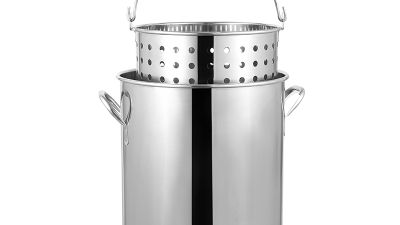
Choosing a stainless steel seafood frying pot set means balancing capacity, heat performance, and ease of handling. For camping and backyard cooking, a durable stainless steel pot offers reliable, even heating for seafood boils, fried fish, or a whole turkey, while its sturdy yet manageable construction suits gatherings away from a full kitchen. The included perforated basket makes it easier to lift food and drain cooking liquid, helping simplify serving and cleanup. The U.S. Bureau of Economic Analysis reported that outdoor recreation contributed about $1.2 trillion to the national economy in 2023, underscoring the scale of activities where portable, practical cooking equipment can be useful.

For restaurants, hotels, and event kitchens, a larger commercial-style set can support batch cooking and repeated service. Stainless steel is a practical choice for busy food preparation, and the basket allows staff to raise seafood or other ingredients from the pot with less handling. The National Restaurant Association’s 2024 State of the Restaurant Industry report projected U.S. restaurant sales of $1.1 trillion, reflecting the importance of dependable equipment in professional food service. Whether cooking beside a river, hosting a garden seafood boil, or preparing food for guests, choose a pot set sized for the group and cooking setup, with a basket that is easy to lift and drain.

FAQS

Which material suits most stock pot users?

Stainless steel with an aluminum or copper core offers a practical balance. It resists acidic foods and helps spread heat. A useful middle ground.

Why choose a thick, flat base?

It sits steadily and distributes heat more evenly than thin steel. This can help keep beans or thick soup from scorching. It is not a cure-all.

Is aluminum a good choice?

Aluminum heats quickly and keeps a large pot lighter. Uncoated aluminum may react with acidic foods, so consider an anodized finish or lined cooking surface. Check the details.

What is the drawback of enameled cast iron?

It holds heat well, but a full pot can be heavy and awkward to pour. Try lifting the empty pot before buying. Weight can surprise you.

What capacity works for everyday cooking?

A 6-to-8-quart pot suits many households. Larger batches may need more room, but extra capacity can take up cabinet space. Measure first.

Which handle features make lifting safer and easier?

Look for wide, secure handles with room for oven mitts. The pot should feel balanced when lifted, not just sturdy on the shelf. Test the grip.

What should I look for in a stock pot lid?

A snug-fitting lid helps control steam while still allowing you to check the simmer. Lids and rivets can be awkward to clean. A small annoyance.

Can a stock pot prevent uneven cooking on its own?

No. A thick base and moderate heat can help, but an uneven burner may still cause problems. Stir occasionally during long simmering. I would not ignore the burner.

Conclusion

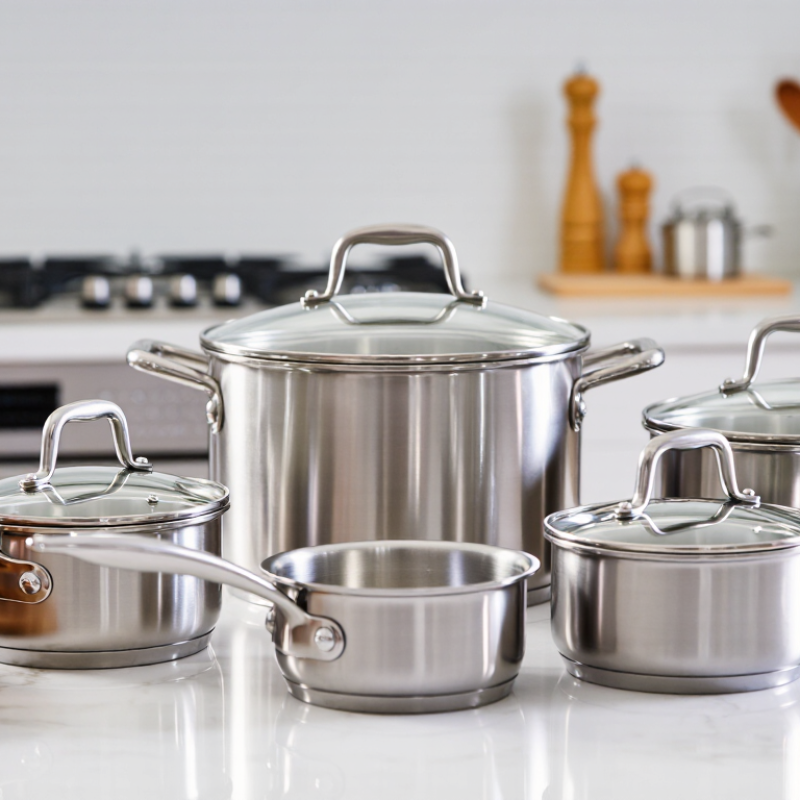
A Cookware Stock Pot is a deep, roomy vessel designed for simmering soups, broths, sauces, and large batches of food. The best choice for 2026 depends on how you cook: stainless steel offers durability and versatility, while aluminum heats quickly and can reduce overall weight. Capacity, width, and height affect how much a pot holds, how evenly it heats, and how easily it fits on your stovetop or in storage.

Practical details can make everyday cooking more comfortable, including sturdy handles, a well-fitting lid, clear capacity markings, and a base suited to your cooktop. Home cooks who prepare occasional soups may prefer a lighter, medium-sized pot, while frequent batch cooking calls for greater capacity and durable construction. Comparing these factors helps you find a stock pot that balances cooking performance, ease of handling, and storage needs.
Aria

Aria

Aria is a seasoned marketing professional with over three decades of experience dedicated to the stainless steel cookware industry. Her profound understanding of product quality and manufacturing processes allows her to effectively convey the unique advantages of the company's offerings. Passionate......
Previous China Top Stainless Steel Work Table With Wheels Supplier