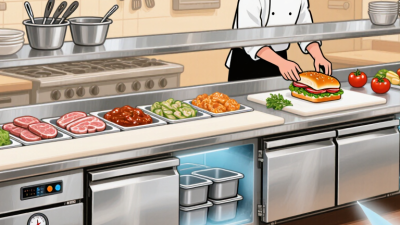
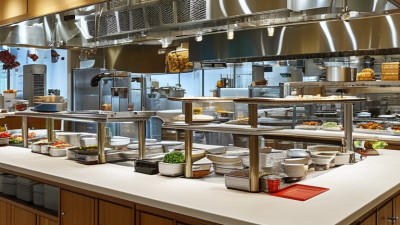
So, here's the thing about global buyers heading into 2026—the market for commercial prep tables is absolutely packed. You've got refrigerated ones, freezer-base models, pizza prep tables, sandwich units, undercounter options, and even mobile versions, each built for a slightly different kitchen vibe. Take a salad station, for instance: it usually needs shallow pans and quick, easy access. But if you're running a butcher counter, you're probably looking at deeper storage, sturdier casters, and a worktop that can take a beating. Honestly, no single design is going to fix everything we throw at it—there's just no one-size-fits-all answer when it comes to operations.
You know, the latest reports really back up this growing demand. Grand View Research, for instance, points to commercial refrigeration as a hot segment in foodservice equipment—mostly because restaurants are expanding, food delivery is booming, and everyone's getting stricter about temperature control. Then Technavio's analysis of commercial kitchen gear also highlights things like replacement needs, energy efficiency, and the whole modular kitchen layout trend. But here's the catch: these reports don't exactly see eye to eye on what counts as the market. So the numbers aren't perfectly apples-to-apples. And that's a pretty big deal, honestly.
So, there's this guy Richard Young — he's basically the go-to energy-efficiency expert over at Frontier Energy's Food Service Technology Center. And he's got this handy rule of thumb: equipment really shines when it matches how people actually do their jobs. Sounds obvious, right? But here's the kicker: even a top-tier, energy-saving Commercial Prep Table can totally miss the mark if your staff leaves the doors hanging open, crams too much onto the pans, or blocks the airflow. Little things like that? They can add up fast. So yeah, attention to the small stuff matters more than you'd think.
So you're looking into commercial prep tables for 2026, huh? Let's break down what actually matters when you're buying from overseas. We'll dig into capacity, how well they hold temperature, the stainless steel build, keeping things clean, mobility, energy efficiency, getting to the parts for service, and whether they meet the certifications you'll need. Things like NSF, ETL, UL, CE—they mean different things depending on where you're shipping to. So don't just assume; double-check the current regulations for your market before you place an order. And hey, don't get hooked on price alone—that's a trap. You really need to think about your workflow, how much maintenance it'll require, and the total cost of owning it over time. Those deserve just as much attention as the upfront cost, if not more. Look, no matter how good the recommendations are, they're never going to be perfect. I mean, things like the weather, how people actually work, the way you lay out your menu, or just how well the installation goes—all of that can really throw things off.
Commercial Prep Tables Defined: Functions, Sizes, and 2026 Buying Scope
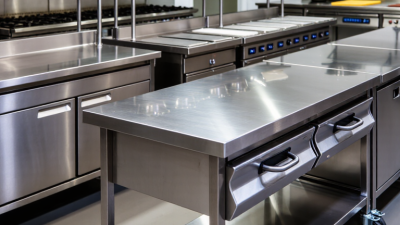
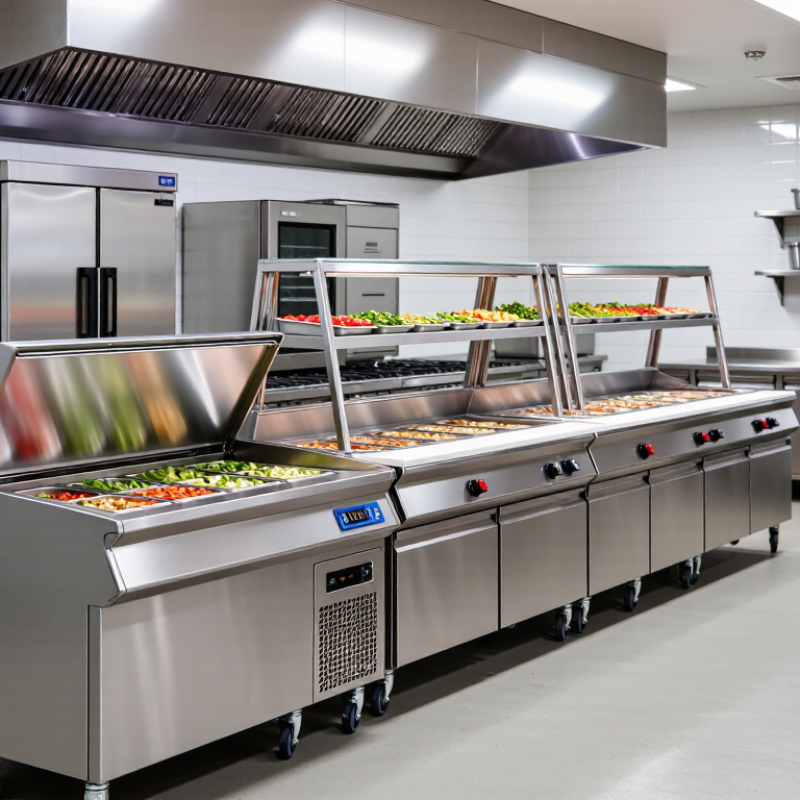
A Commercial Kitchen Prep Table combines a work surface, ingredient storage, and sometimes chilled holding. It supports sandwich assembly, salad preparation, pizza topping, and portion control. The most useful models keep ingredients close without blocking staff movement. Stainless steel surfaces resist stains and simplify daily cleaning. However, a polished exterior does not guarantee good hygiene. Inspect corner joints, drain paths, door seals, and removable pans before purchasing.
Common sizes range from compact 900 mm units to wider 1800 mm tables. Depth, pan capacity, counter height, and internal shelving affect real productivity. Refrigerated tables suit fresh ingredients, while ambient tables may fit dry preparation areas.
In 2026, global buyers should compare temperature performance, energy use, insulation, plug requirements, and service access. Local food-safety rules also matter. A unit designed for one market may require adjustments elsewhere. That detail is often underestimated.
Tips:Measure doorways, lifts, and staff aisles first. Leave ventilation space around refrigeration equipment. Ask for temperature records, material specifications, warranty terms, and cleaning instructions. Check whether replacement gaskets and controllers are locally available. Choose capacity from peak-hour demand, not average sales. Bigger is not always better. An oversized table can consume space, waste energy, and slow movement. I would also test drawer travel and lid balance in person when possible; small faults become expensive frustrations.
Refrigerated Prep Tables: ≤41°F Holding and GN 1/6–1/3 Pan Capacity
Refrigerated prep tables are built for fast service, controlled holding, and cleaner ingredient handling. A reliable unit should maintain food at 41°F or below during normal operation. The exact result depends on room temperature, loading habits, door openings, and maintenance.
A Commercial Stainless Steel Prep Table commonly supports GN 1/6 to GN 1/3 pans. Smaller GN 1/6 pans suit chopped herbs, sauces, garnishes, and portioned toppings. GN 1/3 pans offer more space for lettuce, sliced vegetables, or prepared proteins. Pan depth also matters. Deep containers can restrict cold-air circulation when the table is fully loaded.
Keep ingredients covered when possible. Avoid placing warm food directly into the refrigerated well. That practice raises cabinet temperature and may affect nearby pans. Use a calibrated thermometer to check the product, not only the display. Display readings can be reassuring.
But they are not enough.
Global buyers should verify voltage, frequency, plug configuration, refrigerant requirements, and local sanitation standards before ordering. Stainless steel surfaces are practical, yet welded corners and removable gaskets deserve closer inspection. These details influence cleaning time and long-term reliability. I have found capacity descriptions can be optimistic. Confirm usable pan count with the supplier’s loading diagram. Leave enough clearance around the condenser, even in a busy kitchen. Small compromises here may create larger service problems later.
Pizza Prep Tables: 1/3-Size Pans, 14–20-Inch Worktops, and Workflow
Pizza prep tables must support speed without turning the cook line into a crowded shelf.
A commercial prep table with backsplash keeps ingredients, dough, and cleaning zones within reach. For pizza production, 1/3-size pans are especially practical. They separate mozzarella, olives, peppers, and cooked toppings without taking excessive space. Clear pan labeling reduces reaching and guessing during a rush.
Worktop depth also shapes the workflow.
A 14-inch surface suits compact kitchens and narrow service lines. It gives staff less room for dough stretching, but improves aisle clearance. A 20-inch worktop offers better space for flouring, cutting, and assembling larger pizzas. It may, however, create traffic problems near ovens or pass-through areas. Measure door swings and employee movement, not only the table footprint.
Temperature control requires equal attention.
Keep pans covered when possible, and check product temperatures with a calibrated thermometer. Cold air must circulate around stored ingredients, so overfilling the pan rail can weaken performance. In daily operations, staff may place boxes or utensils on the worktop, despite written procedures. That habit is easy to overlook. A small utensil rail or designated landing area can protect the assembly surface. Still, every kitchen differs. Recheck the workflow during the busiest service, because a layout that looks efficient on paper may slow the person reaching for the third pan.
Stainless Steel Selection: 304 vs 430 Grades and NSF/ANSI 7 Compliance
For 2026 global buyers, steel choice starts with the working environment, not a catalog photograph.
A Horeca Prep Table near citrus, brine, or chlorinated wash water needs stronger corrosion resistance.
Type 304 usually contains about 18% chromium and 8% nickel.
Type 430 contains roughly 16–18% chromium and is ferritic, magnetic, and usually less expensive. It can perform well in dry, lower-salt kitchens. It is less forgiving around seams, scratches, and standing moisture.
The World Stainless Stainless Steel in Figures 2024 report recorded about 62.6 million tonnes of global stainless crude-steel production.
Volume does not equal suitability. That distinction matters.
For refrigerated prep tables, NSF/ANSI 7 compliance is a performance question.
The standard addresses commercial refrigerators and freezers, including temperature control, construction, sanitation, and food protection. Buyers should request the complete unit’s certification, test conditions, and listed configuration.
A 304 worktop does not make an uncertified table compliant.
The FDA Food Code 2022 also emphasizes cleanable, corrosion-resistant food-contact surfaces. Local authorities may apply additional requirements. In practical purchasing reviews, check welded corners, door gaskets, drain access, insulation, and temperature records under a loaded pan rail. The 2024 World Stainless figures provide market context, not site validation.
I would question any quote stating “stainless steel” without grade, thickness, finish, or certification scope.
That omission is easy to miss. It may become expensive later.
Global Buyer Checklist: Voltage, HACCP Controls, Energy, and Total Cost
2026 Top Commercial Prep Table Types for Global Buyers
Commercial prep tables now serve different workflows: refrigerated sandwich tables, pizza prep counters, salad stations, and freezer prep units. Choose by food volume, pan layout, and cleaning access, not appearance. Voltage must match the destination kitchen. Confirm frequency, phase, plug type, circuit load, and startup current before ordering. A 230-volt unit may still fail if the site uses a different frequency. Use a qualified electrician for final verification.
HACCP controls should be visible and practical. Look for stable temperature recovery, easy-to-clean gaskets, rounded corners, removable pan rails, and clear product separation. Record temperature checks during receiving, preparation, and service. Energy labels help, but they do not show every operating cost. Door openings, ambient heat, loading habits, and condenser cleaning can change consumption. Compare annual electricity use, filter replacement, service access, freight, and expected downtime. My own early checklist once missed drain placement. That mistake delayed cleaning. Small errors compound.
Tips: Request a sample data sheet. Check the actual running amperage. Ask for temperature logs under heavy use. Measure door clearance at the site. Calculate five-year total cost, not only purchase price. Leave space around the condenser. Fit beats fashion. Even efficient equipment wastes energy when overloaded. One uncertainty remains: local electricity rates can change, so include a realistic range rather than one perfect estimate.
2026 Top Commercial Prep Table Types for Global Buyers
Global buyer checklist benchmark: voltage compatibility, HACCP-oriented controls, energy use, and total cost of ownership.
Voltage
Confirm 115 V / 60 Hz or 220–240 V / 50 Hz configuration before ordering. Plug, phase, frequency, and local certification must match the destination market.
HACCP Controls
Prioritize digital temperature display, adjustable setpoint, high-temperature alarm, removable gaskets, and cleanable food-contact surfaces.
Total Cost Assumption
Five-year energy cost uses 365 operating days per year and an electricity rate of US$0.15/kWh. Purchase values are planning benchmarks, not quotations.
Benchmark figures represent typical commercial equipment ranges and should be validated against the final specification, climate, loading pattern, duty cycle, and local utility tariff.
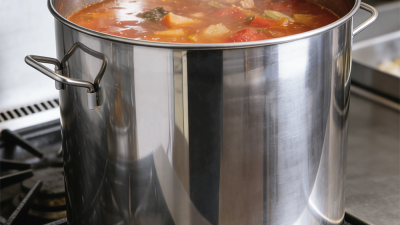
Stainless Steel Commercial Cooking Pots: Insights from Grand View Research & Fortune Business Insights Reports
Grand View Research identifies the commercial cookware market as a steadily expanding sector, supported by professional foodservice growth, replacement demand, and rising expectations for efficiency and durability. Fortune Business Insights estimates the global cookware market at approximately USD 19.77 billion in 2023 and projects it to reach about USD 31.94 billion by 2032, representing a compound annual growth rate of roughly 5.5%. These figures reflect a clear preference for dependable, high-performance equipment in restaurants, catering operations, and increasingly capable home kitchens.
Stainless steel commercial cooking pots are well positioned within this trend. Their three-ply construction, featuring an encapsulated aluminum core, promotes even heat distribution, minimizes hot spots, and responds quickly to temperature changes during simmering, reduction, and rapid boiling. Available from 12-quart sauce pots to stock pots exceeding 150 quarts, they support batch cooking, pasta preparation, blanching, soup production, and large-volume broth making. Mirror-polished exteriors provide a professional appearance, while satin interiors simplify food release and cleaning.
For demanding kitchens, riveted loop handles, reinforced rims, laser-etched capacity markings, and optional vented or solid lids improve control and handling. Induction compatibility, oven safety up to 500°F (260°C), and dishwasher-safe construction help shorten turnaround times. Manufactured to strict quality standards, these stainless steel pots offer commercial-grade durability, reliable performance, and practical value for busy foodservice environments and serious culinary applications.
Conclusion
Choosing the right Commercial Prep Table in 2026 requires matching equipment design with foodservice workflow, available space, and regional operating requirements. Refrigerated prep tables support safe holding at 41°F or below while accommodating GN 1/6 to 1/3 pans. Pizza prep tables typically combine 1/3-size pan capacity with 14–20-inch worktops, while sandwich and salad tables prioritize fast, organized assembly. Undercounter models, available in approximately 24–72-inch widths, help maximize limited kitchen space without sacrificing preparation capacity.
Global buyers should also evaluate stainless steel construction, comparing the durability and corrosion resistance of 304 grade with the cost efficiency of 430 grade. NSF/ANSI 7 compliance, HACCP-oriented temperature controls, electrical voltage, energy consumption, cleaning access, serviceability, and total ownership cost are essential purchasing factors. A well-selected table should provide reliable temperature management, efficient ingredient access, long-term durability, and compatibility with local kitchen standards and daily production demands.