Committed to creating high-performance stainless steel composite cookware.

Picking the best stainless kitchen trolley for 2026? It’s not just about shiny surfaces and bargain prices. In a commercial kitchen, you need mobility, hygiene, durability, and a service flow you can actually count on. A good trolley has to roll safely down narrow aisles, handle heavy trays without drama, and stay steady when things get hectic. Grand View Research’s Commercial Kitchen Equipment Market Size, Share & Trends Analysis Report puts the global market at roughly USD 12 billion in 2023, and it expects growth to keep going through 2030. That says something: foodservice operators are investing more in productivity and equipment upgrades. The National Restaurant Association’s 2024 State of the Restaurant Industry Report projected over USD 1 trillion in U.S. restaurant sales. So yeah, the demand is real.
But market growth doesn’t automatically mean quality. A glossy frame can hide weak welds, noisy casters, or corners that are a pain to clean. The better Commercial Kitchen Trolley should fit the environment it works in. Look at stainless-steel grade, shelf load capacity, wheel diameter, braking performance, and corrosion resistance. NSF/ANSI 2 guidance also points to cleanability and material suitability for food-service equipment. Those details really matter when the trolley sits near hot ovens, wet sinks, and crowded prep lines.
Small details decide performance.
This guide compares practical options for 2026 based on service conditions, maintenance needs, and lifecycle value. It also looks at ergonomic risks, since a trolley that rolls poorly can add to staff strain. I won’t pretend one model works for every kitchen. A compact café needs different capacity than a hospital, hotel, or central production facility. Budget assumptions can fool you, too. The cheapest purchase might end up costing more in replacements and labor down the road. Before you choose a stainless kitchen trolley for commercial use, verify certification, warranty terms, spare-part access, and real load testing.
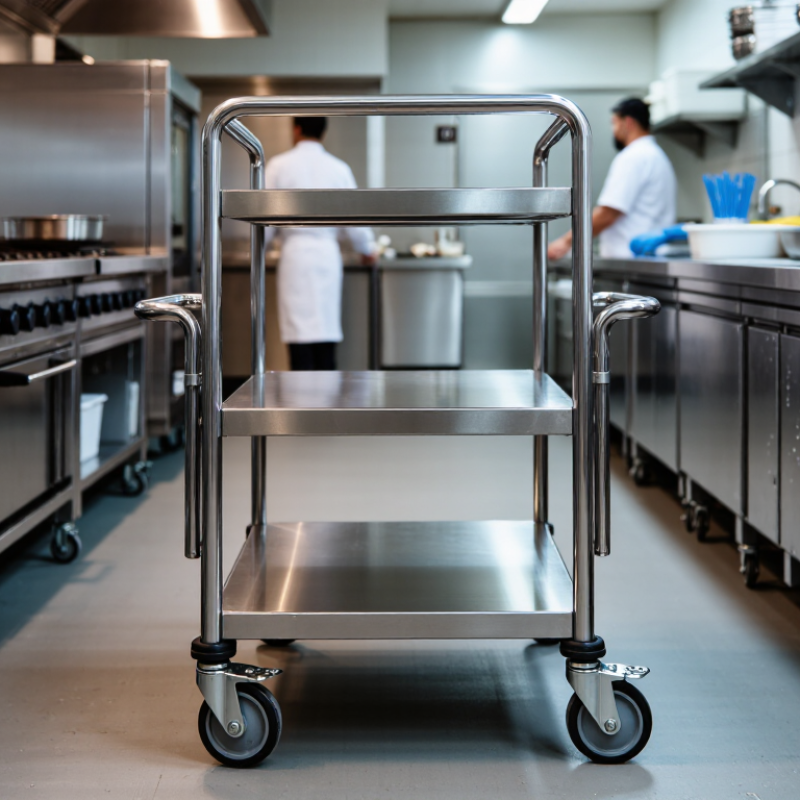
A commercial stainless kitchen trolley must survive heat, water, impact, and constant movement. Grand View Research projects the commercial kitchen equipment market to grow at about 6.7% annually from 2024 to 2030. That growth raises practical questions about durability, hygiene, and labor efficiency. A trolley should use corrosion-resistant stainless steel, preferably with documented material grades such as 304. However, steel grade alone does not prove quality. Welds, corners, handles, and undershelves also need inspection.
Cleanability matters every day. NSF/ANSI 2 emphasizes food-equipment surfaces that resist contamination and support effective cleaning. A reliable kitchen bussing trolley should have smooth welds, rounded edges, and no exposed dirt traps.
Four swivel casters improve turning around preparation benches, while two lockable brakes help during loading. Poor casters can still damage floors. Small details matter.
In busy service, I would test the trolley with wet trays, stacked pans, and one-handed steering. It should remain stable near sinks and narrow doorways. A useful design may include a raised rim, removable trays, and a clearly stated load rating. These features reduce spills and repeated lifting.
Yet, more shelves can also create hidden cleaning work. No trolley is perfect. Buyers should question attractive finishes, because polished steel can conceal weak frames or uneven welds. In 2026, the better choice is not the most decorated trolley. It is the one with verified specifications, repairable parts, and consistent performance under real kitchen pressure.
A commercial kitchen trolley must survive heat, moisture, impact, and constant movement. Stainless steel grade matters. Grade 304 suits most kitchens, while grade 316 better resists salt and chemical exposure. Check the steel certificate, not only the sales description. The 2022 FDA Food Code emphasizes smooth, durable, nonabsorbent, and easily cleanable surfaces. That guidance should shape your inspection.
Load capacity needs practical testing. Place full pans on every shelf, then push the trolley across a wet floor. It should remain stable. The casters should roll quietly, turn without dragging, and include reliable brakes. Tiny wheels fail quickly. The National Restaurant Association’s 2024 State of the Restaurant Industry report projected United States restaurant sales above 1 trillion dollars. High-volume service makes mobility and durability operational concerns, not cosmetic preferences.
Hygiene details deserve close attention. Choose welded corners, rounded edges, removable shelves, and minimal crevices around caster mounts. The World Health Organization estimates that contaminated food causes about 600 million illnesses globally each year. A trolley cannot prevent contamination alone, but its design can reduce cleaning gaps. Measure doorways, lift access, and storage clearance before ordering. I once overlooked handle height; staff adjusted their posture repeatedly, which became an avoidable fatigue problem. Manufacturers often publish impressive load figures, yet those figures may exclude uneven floors, repeated impacts, or wet conditions. Test the trolley in your actual workflow, where perfection rarely survives.
The best stainless kitchen trolley depends on the task, not the largest load rating. A three-tier utility trolley suits prep areas, beverage stations, and short transfers. Its open shelves improve visibility but expose food to splashes. A platform trolley moves sacks, crates, and bulk cookware more safely. It needs larger casters and a stronger frame.
For plated service, a tray trolley reduces repeated carrying between the pass and dining area. A heated or insulated trolley protects serving temperature during delays. This matters because the FDA Food Code emphasizes time and temperature control for food safety. Dish-collection trolleys should have removable racks and smooth welds. Deep corners can trap grease and water. In practical kitchen trials, quieter casters often matter more than a small increase in capacity. Staff push them through narrow aisles every few minutes. The wrong design creates traffic and fatigue. It is an easy detail to underestimate.
Tips: Match the trolley to its route. Measure doorways, lift gaps, and turning space first. Select brakes for sloped floors and swivel casters for tight corners. USDA estimates that 30–40% of the U.S. food supply is wasted, so covered ingredient trolleys may reduce exposure and handling losses. However, a trolley alone cannot solve waste. Test wheel resistance, handle height, cleaning access, and noise during a busy service. One practical mistake is choosing maximum capacity. An overloaded trolley can become harder to control and slower than two smaller units.
Comparing trolley types for different commercial kitchen tasks. Scores use a practical 1–5 suitability index based on load stability, maneuverability, hygiene, and workflow efficiency.
Utility shelf trolleys are the most versatile option for ingredient movement, while tray rack trolleys are better for organized meal service. Platform trolleys handle heavy loads effectively, and insulated transport trolleys are designed for temperature-sensitive food delivery.
2026 Best Stainless Kitchen Trolley for Commercial Use?
How Material Grade and Construction Affect Performance
In a busy commercial kitchen, a kitchen trolley with wheels faces heat, water, grease, and constant impacts. Material grade determines how well it survives this routine. Type 304 stainless steel suits most indoor kitchens because it resists everyday corrosion and cleans easily. Type 316 offers stronger protection near salt, brine, or coastal air, but costs more. A higher grade is not automatically better for every site. Check the actual cleaning chemicals and exposure first.
Thickness matters too. Thin sheet can flex under stacked trays, while heavier sheet feels stable during turning and loading. Reinforced shelves, rounded corners, and fully sealed welds reduce food traps and sharp damage points. Casters need more than a large diameter. Heat-resistant wheels, reliable brakes, and corrosion-resistant fittings affect safety and movement. I have found that a trolley may look strong, yet wobble when its frame lacks cross-bracing. Small details matter.
Construction quality often separates a useful trolley from a costly replacement. Ask for a stated steel grade, load rating, weld finish, and caster capacity. Inspect the underside, not just the polished surfaces. Some suppliers provide impressive specifications, but practical testing can reveal weak joints. Leave clearance for doors and service aisles. Recheck fasteners and wheels regularly, because even good stainless steel cannot correct poor maintenance. My own preference is not always the best answer; kitchen layout and workload should decide the final specification.
A commercial kitchen trolley must match real workloads, not showroom dimensions. Measure the heaviest service load, door widths, lift access, and turning space. A 2024 foodservice operations survey reported that labor efficiency remains a major equipment concern. Capacity therefore affects safety as much as productivity. Use two or three shelves for plated meals, pans, and cleaning tools. Keep heavy containers below waist height.
Mobility depends on caster quality, wheel diameter, and floor conditions. Larger casters cross grout lines more smoothly, while total-lock brakes prevent unwanted movement during loading. The U.S. Bureau of Labor Statistics continues to identify overexertion and bodily reaction among leading nonfatal workplace injury categories. That supports choosing a trolley that rolls easily, rather than one that merely holds more. Test it with a full load. Empty-floor performance can mislead.
Safety also depends on cleanability. The FDA Food Code 2022 requires food-contact surfaces to be smooth, durable, corrosion-resistant, nonabsorbent, and easily cleanable. A stainless steel kitchen equipment shelf should have sealed welds and rounded corners, without deep seams that trap grease. The CDC estimates that contaminated food causes about 48 million U.S. illnesses annually, so cleaning access deserves serious attention. Wash, rinse, sanitize, and dry every shelf after heavy service. I would not trust a trolley with decorative perforations; they look useful, but they may slow inspection. Even stainless steel can stain when chemicals, salt, and moisture remain overnight.
| Trolley Configuration | Typical Overall Size (L × W × H) |
Shelf / Tray Capacity | Recommended Working Load | Stainless Steel Construction | Castor Specification | Mobility Assessment | Safety Features | Cleaning Requirements | Best Commercial Use | Overall Assessment |
|---|---|---|---|---|---|---|---|---|---|---|
| Compact Two-Tier Utility Trolley | 800 × 500 × 950 mm | 2 shelves; approximately 160 L usable storage area | 80–120 kg total; distribute weight evenly | Food-contact surfaces commonly made from AISI 304 stainless steel; tubular frame construction | 4 swivel castors, typically 100 mm diameter; 2 with brakes | ★★★★★ | Rounded corners, raised shelf edges, non-marking wheels, two locking castors | Wipe and sanitize after each shift; clean welds and wheel housings regularly | Narrow corridors, cafés, bars, and light meal service | Best for compact spaces and frequent short-distance movement |
| Three-Tier Service Trolley | 900 × 600 × 950 mm | 3 shelves; approximately 250 L usable storage area | 120–180 kg total; about 40–60 kg per shelf | AISI 304 stainless steel shelves and frame; brushed finish helps reduce visible marks | 4 swivel castors, typically 125 mm diameter; 2 with brakes | ★★★★★ | Raised shelf rims, reinforced underside, ergonomic push handle, wheel brakes | Open shelves allow hose-down cleaning; dry thoroughly to limit water spotting | Restaurant service, cookware transport, and banquet operations | Best all-round option for capacity, access, and maneuverability |
| Heavy-Duty Three-Tier Trolley | 1000 × 700 × 1000 mm | 3 reinforced shelves; approximately 380 L usable storage area | 200–300 kg total; verify load rating before use | Heavier-gauge AISI 304 stainless steel; reinforced shelf supports and welded frame | 4 swivel castors, typically 150 mm diameter; 2 or 4 with brakes | ★★★★☆ | High-load frame, corner bumpers, raised shelf lips, industrial-grade brakes | Use alkaline degreaser for grease buildup; inspect welds, fasteners, and castors | Central kitchens, loading areas, bulk ingredients, and cookware | Best for heavy loads where durability is more important than compactness |
| Enclosed Cabinet Trolley | 900 × 600 × 1000 mm | 2–3 internal shelves; approximately 220 L enclosed volume | 100–160 kg total; lower shelves should carry heavier items | AISI 304 stainless steel body with smooth external panels and hinged doors | 4 swivel castors, typically 125 mm diameter; 2 with brakes | ★★★★☆ | Lockable doors, concealed or protected edges, anti-tip shelf arrangement | Clean door seals, handles, corners, and internal shelf supports; avoid abrasive pads | Hygiene-sensitive storage, room service, and clean-to-dirty separation | Best for protecting food-contact equipment from dust and splash contamination |
| GN Pan Rack Trolley | 600 × 700 × 1700 mm | 12–20 slots for 1/1 GN pans, depending on slot spacing | 150–250 kg total; follow the rack and pan load limits | AISI 304 stainless steel upright frame with welded or secured pan rails | 4 swivel castors, typically 125 mm diameter; 2 with brakes | ★★★☆☆ | Pan retaining rails, end stops, anti-tip base, wheel brakes | Remove pans before washing; clean rails and lower frame to prevent grease accumulation | Combi-oven support, baking, catering production, and hot-food holding | Best for vertical pan capacity, but requires attention to stability and overhead clearance |
| Waste and Recycling Collection Trolley | 900 × 550 × 950 mm | 2–3 removable bins; approximately 180–240 L combined volume | 100–180 kg total, depending on waste density and bin size | AISI 304 stainless steel frame; removable polyethylene or stainless bins | 4 swivel castors, typically 100–125 mm diameter; 2 with brakes | ★★★★☆ | Bin retention system, lid or splash guard, rounded frame, foot-operated lid option | Empty promptly; wash and sanitize bins daily; dry the frame and castor areas | Back-of-house waste sorting, dishwashing areas, and food preparation zones | Best for controlled waste handling when sanitation procedures are followed |
Selecting the best stainless kitchen trolley starts with your workflow, not its appearance. In a busy commercial kitchen, a trolley should move cleanly between preparation, cooking, and dishwashing zones. Measure doorways, lift access, turning space, and storage gaps before ordering. A 900-millimetre-wide unit may look practical, yet fail beside a crowded pass.
Material quality matters. Choose food-contact surfaces made from corrosion-resistant stainless steel, with welded joints and rounded corners. The U.S. FDA Food Code stresses smooth, durable, and easily cleanable equipment surfaces. Avoid deep seams where grease and moisture can collect. Check wheel locks, load ratings, handle height, and shelf clearance. Small design details affect staff safety during a rushed service.
Data supports careful specification.
Grand View Research reported that the global commercial kitchen equipment market reached approximately USD 13 billion in 2023, reflecting continued investment in professional foodservice infrastructure. The report also identified replacement demand and operational efficiency as important market drivers. A trolley should support both. For a Horeca Kitchen Work Table, select casters suited to wet floors and uneven thresholds. Test one fully loaded before buying several units. That step is often skipped. It should not be. A trolley that rolls well empty may steer poorly with hot pans, containers, and stacked trays. Load testing exposes weaknesses that product sheets rarely show.
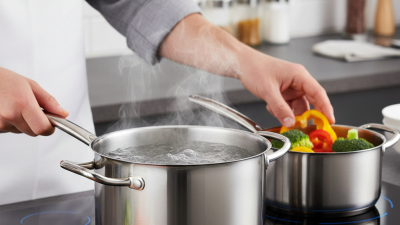
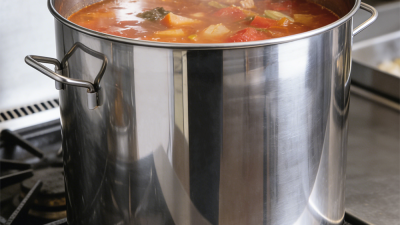
Professional kitchens need cookware that can handle volume, precision, and continuous service. The USDA Economic Research Service reports that food-away-from-home accounted for approximately 58.5% of total U.S. food expenditures in 2023, highlighting the scale and intensity of commercial meal production. Premium stainless steel cooking pots are designed for this environment, supporting everything from daily soup preparation to large-batch pasta, chili, chowder, and stock.
A three-layer base with an encapsulated aluminum core promotes fast, even heat distribution and minimizes hot spots during delicate reductions or rolling boils. The mirror-polished exterior provides a professional appearance and resists fingerprints, while the satin-finished interior helps release food easily and simplifies cleanup. Available in sizes ranging from 12-quart sauce pots to 150-plus-quart stockpots, these vessels can accommodate routine prep, banquet production, lobster boils, and high-volume broth making.
Temperature control is equally important for food safety and quality. The FDA Food Code 2022 recommends maintaining hot foods at 135°F or above and cooling cooked foods from 135°F to 70°F within two hours, then to 41°F within six hours. Durable stainless steel construction, reinforced rims, and fully welded handles support reliable handling throughout these demanding workflows. Manufactured by experienced suppliers and factories in China, these pots offer commercial-grade durability, responsive heat control, and a limited lifetime warranty for professional kitchens and serious home cooks.
Type 304 suits most indoor kitchens. It resists everyday moisture and cleans easily. Type 316 helps near salt, brine, or coastal air.
No. Type 316 costs more and may add little value in a dry indoor kitchen. Check chemicals, salt exposure, and cleaning routines first.
Thicker sheets reduce flexing under stacked trays. Cross-bracing improves stability during turns. Sealed welds and rounded corners limit grease traps.
Ask for the steel grade, load rating, weld finish, and caster capacity. Inspect the underside carefully. Polished surfaces can hide weak joints.
Measure door widths, lift access, aisles, and turning space. Compare these measurements with the loaded trolley dimensions. A wide trolley may fail beside a crowded service counter.
Larger casters cross floor joints more smoothly. Heat-resistant wheels suit hot kitchen areas. Total-lock brakes prevent movement during loading.
Place heavy containers below waist height. Use two or three shelves for meals, pans, and cleaning tools. Keep loads balanced.
Test it fully loaded, not empty. Push it across thresholds and turn it tightly. Watch for wobbling, steering resistance, or brake movement.
Choose smooth, durable, nonabsorbent surfaces. Avoid deep seams and decorative perforations. Wash, rinse, sanitize, and dry each shelf after heavy service.
Recheck fasteners, wheels, brakes, and weld areas regularly. Remove salt, moisture, and chemicals before they remain overnight. Stainless steel still needs maintenance.
Choosing the best Stainless Kitchen Trolley for commercial use in 2026 requires more than comparing appearance and price. A reliable trolley should be evaluated by its stainless steel grade, structural strength, load capacity, wheel quality, maneuverability, safety features, and ease of cleaning. Different commercial tasks may require different designs, such as multi-shelf trolleys for transport, enclosed models for storage, or specialized units for food preparation and service. Construction details, including reinforced frames, smooth welds, stable shelves, and corrosion-resistant surfaces, directly affect durability and hygiene in demanding kitchen environments.
The right selection should match the operation’s workflow, available space, cleaning procedures, and expected workload. Buyers should consider shelf spacing, handle comfort, locking casters, edge protection, noise control, and whether the trolley can move safely across various floor surfaces. By balancing material quality, capacity, mobility, sanitation, and long-term maintenance needs, commercial kitchens can choose a Stainless Kitchen Trolley that improves efficiency, supports safer handling, and delivers dependable daily performance.